
Tag: cell
-
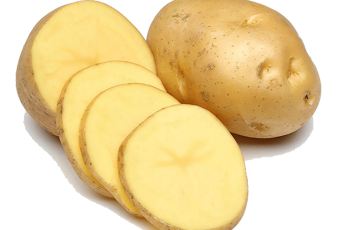
Investigation: The Effect of Salt on a Potato
Students observe how the mass of a potato slice changes when soaked overnight in salt water. The activity is intended to be done as part of a lesson on osmosis and hypertonic and hypotonic solutions. Students will need about 15 minutes to set up their cups, weigh their slices and make predictions about what they…
-
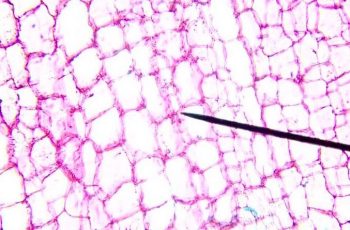
Investigation: Exploring Cells
While biologists might find the history of the cell theory fascinating, I notice that many of my students seem to tune-out when you bring up the history of scientific discoveries. In order to save time and improve engagement, I created this lab to include a short history of the cell theory as students explore prepared…
-
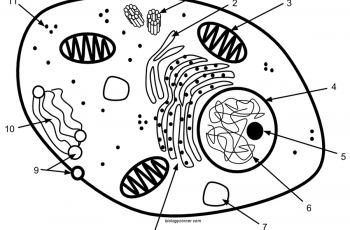
Cell Labeling: Simple and Complex
Students practice labeling organelles on a simple model (2D) and a more complex model. The idea is for students to gain an appreciation for how cell diagrams are created. They don’t all look alike, and are often artistically created. Cell organelles tend to follow basic design rules, like the mitochondria will generally look like a…
-
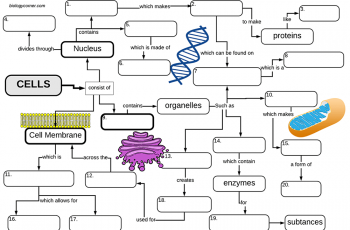
Cell Structures: A Graphic Organizer
This graphic organizer (concept map) organizes the cell structures around three main parts of the eukaryotic cell: the nucleus, cytoplasm, and cell membrane.
-
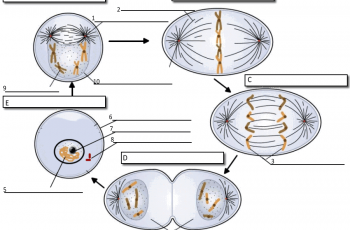
Cell Cycle Labeling
Students label the image of a cell undergoing mitosis and answer questions about the cell cycle.
-
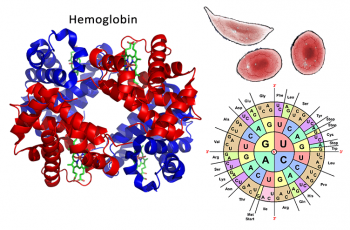
DNA, Proteins, and Sickle Cell
In this activity, students use a codon chart to compare the DNA sequence of HbA (normal hemoglobin) to HbS (sickle cell). The DNA differs in a single base, where the codon for normal hemoglobin codes for glutamine, and the mutant form codes for valine.
-
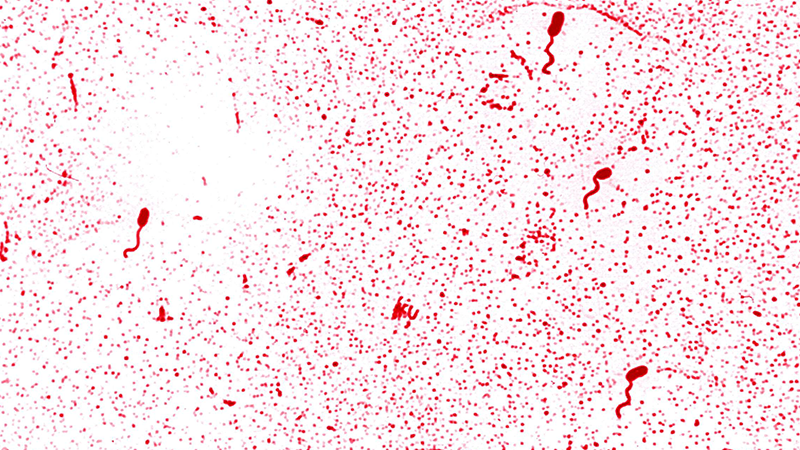
Case Study: How to Survive a Cholera Epidemic
In this case, students explore how cholera is spread and how it affects the body. The case is divided into four sections, with the first part focusing on the role of clean water supplies and the spread of bacteria. In the second part, the affects of the bacteria are examined, with attention on how the…
-
Investigation: Taste Buds and Signal Transduction
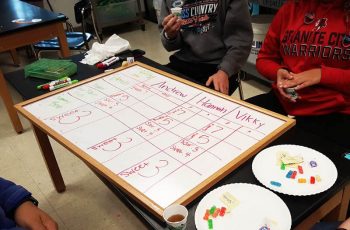
As a part of the chapter on cell signal pathways, students perform a lab that examines how their taste buds are affected by Gymnema. For this lab, I simply placed a question on the board “How does Gymnema tea affect your ability to taste sweet foods?” I provided them with a list of…
-
Cell Membrane and Transport
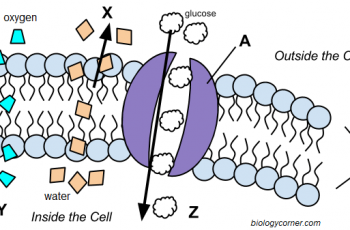
This reinforcement worksheet displays a graphic of the cell membrane showing the phospholipid bilayer and embedded proteins. Students identify structures within the bilayer and use reasoning to determine how molecules are moving across the membrane in response to a hypertonic solution. Worksheet was designed for freshman level biology classes who are studying osmosis and…