
Tag: cell
-
Cell City
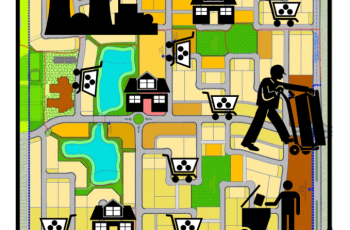
This popular activity asks students to read a story about a fictional town where each part of the city is compared to the parts of a cell. For example: “Widgets are generally produced in small shops around the city, these small shops can be built by the carpenter’s union (whose headquarters are in town hall.)” In this…
-
Investigation: Comparing Plant and Animal Cells
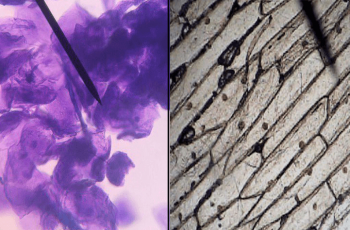
This simple investigation asks students to view cells under the microscope and compare differences between plant and animal cells. Students are instructed in the procedure for removing the epithelial cells of an onion and staining with iodine. These cells are fairly easy to see and most beginning students will have no trouble locating the…
-
Investigation: Why Are Cells So Small?
This activity requires students to practice math skills by measuring the surface area and the volume of boxes. Collect boxes for students to use, these can be any type of box, such as tissue boxes, food boxes, or shoe boxes. Ideally, you want a range of sizes, with at least one box being overly…
-
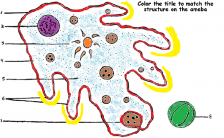
Color the Cellular Structures of the Ameba
This worksheet describes the structures of the unicellular protist known as the ameba. Though NGSS standards do not require units on protozoans, this can still be a useful exercise for examining how structure relates to function and how single-celled organisms move, consume food, and reproduce. What is the amoeba? An amoeba is a type of…
-
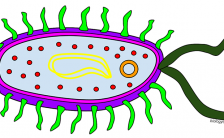
Color a Typical Prokaryote Cell
This worksheet is similar to the animal cell coloring and the plant cell coloring, where the focus is on structures found in the cell and how those structures relate to the cell’s function. Students read a short passage about prokaryotes and the two kingdoms of bacteria: archaeabacteria and eubacteria. The passage includes information about…
-

Zoobiquity – Review and Discussion Questions
I try to read at least one non-fiction book per year to try to keep myself up to date and inspired with new knowledge and advances in medicine. I have a classroom set of “Stiff” that I require my AP Biology students to read during the unit on anatomy. Recently, in a graduate class…
-
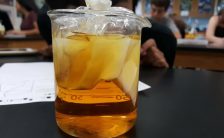
Investigation: Observing Diffusion & Semi-Permeable Membranes
Units on the cell will also include lessons about how the cell transports materials across the membrane. For beginning biology students who don’t have a strong foundation in physical science, the ideas of entropy, solutions, and concentrations can be overwhelming. Diffusion is easy to explain with a perfume bottle or food coloring. …
-
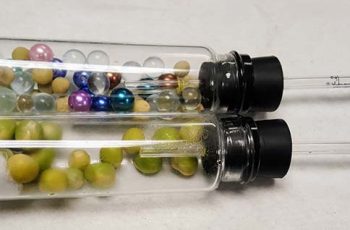
Investigation: Cellular Respiration
Students set up respirometers to measure the oxygen consumption of germinating peas in cold and warm water, and compared to a living organism.
-

Investigation: What Are the Different Types of Cells?
Students look at cells from different domains and kingdoms; compare the size of cells and how their structure and shape differ depending on their function.