
Category: Worksheets
-
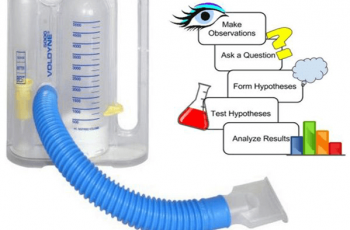
Investigation: Processes of Science
Students must develop their own causal question about what biological factors affect a person’s lung capacity, Then test their hypothesis using a respirometer.
-
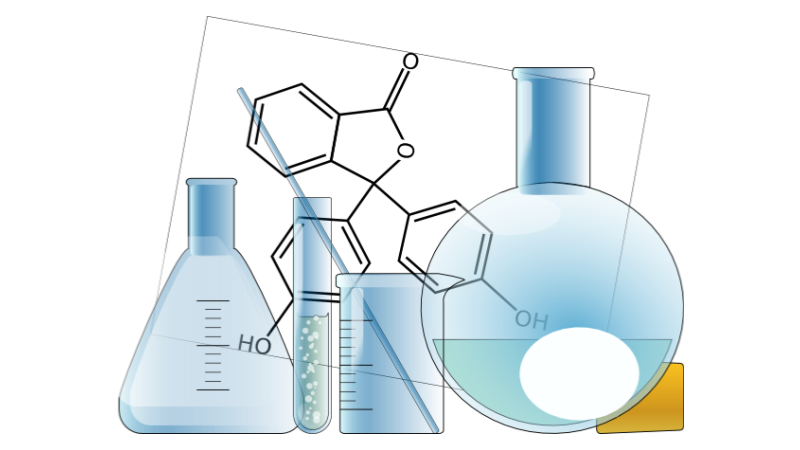
Lab Report Guidelines and Template
Help students organize a lab report for any experiment, includes basic layout: title, introduction, hypothesis, materials and methods, data, and conclusions.
-
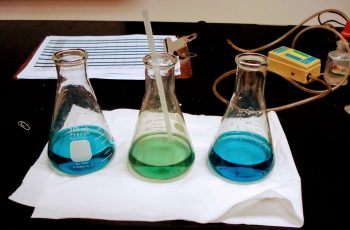
Demo: BTB and Carbon Dioxide
I have used this demonstration every year to introduce the scientific method. The worksheet below is optional and includes instructions for writing a lab report and doing a more involved investigation, but for the beginning of the year, I prefer to just have students observe and give their suggestions for how to test various hypotheses.…
-
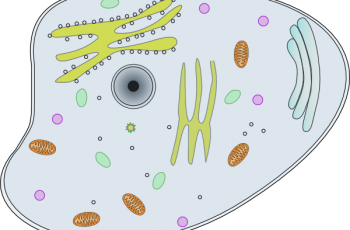
Investigation: Why Are Cells So Small?
This activity requires students to practice math skills by measuring the surface area and the volume of boxes. Collect boxes for students to use, these can be any type of box, such as tissue boxes, food boxes, or shoe boxes. Ideally, you want a range of sizes, with at least one box being overly…
-
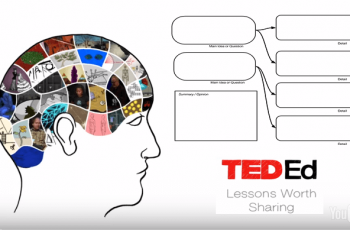
Video Lessons and Taking Notes
Many teachers have adopted a “flipped” model of instruction, where students view lectures from home and then use class time for discussions, experiments, and problem-solving. I have not fully gone to this model because many of my lectures have been redesigned as cases and include information with a discussion and a problem to solve.…
-
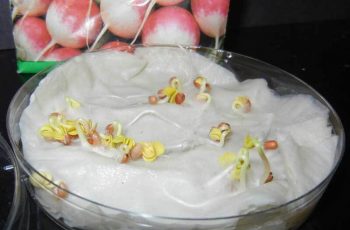
Investigation: What Factors Affect Seed Germination?
This activity can be used as part of a unit on plants or as an activity to illustrate the scientific method. The materials are cheap and can be obtained from the grocery store. Students design an experiment to determine what factors affect seed germination. They are given a list of variables that are appropriate…
-
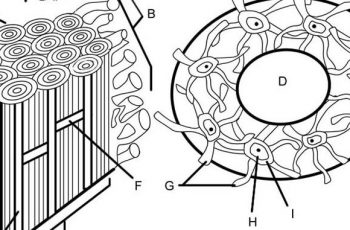
Bone Matrix Anatomy (Coloring)
Anatomy students learn about the skeletal system, where they examine bones and how the bones fit together to make up an entire skeleton. In addition, some course also explore bone tissue and how bone is formed, repaired, and even broken down to release minerals. The bone matrix is composed of cells called osteocytes…
-
Investigation: What Organisms Are Found in Ponds?
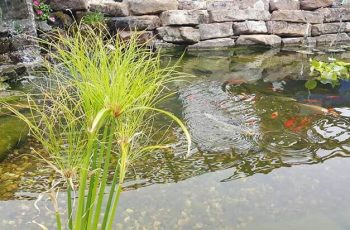
Does your community have ponds, streams, or lakes? Students enjoy working with real biology, and though it may not be possible to take students to a lake, you can bring the lake to the student. This open-ended activity gives students the opportunity to explore pond water and compare the types of species found in…
-
Color the North American Biomes
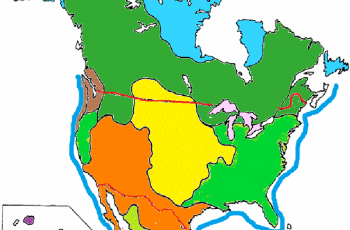
This coloring activity is suitable for beginning biology students who are learning about the plants and animals found in each major biome. The worksheet does require a basic geography knowledge, which I found somewhat lacking in my freshman students. I usually place a large map of North America on the overhead projector for students…
-
Color the Neuron and Neuroglia
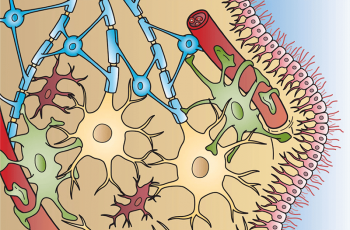
Students can practice what they have learned about neurons with this simple coloring activity. The page shows features of the neuron, such as the axons and dendrites. They will also color the supporting cells of the matrix. There are no instructions, students must identify each of the types of glial cells: oligodendrocytes, astrocytes, microglial cells, ,…
-

Investigation: Stride Length and Bone Lengths
This activity is intended to introduce students to spreadsheets while also reinforcing concepts learned in the unit on the skeletal system. While graphs may be easier to create using google sheets, student can still create graphs by hand using graph paper. Your class will need a set of meter sticks or rules to…
-
Analyzing Graphics: The Carbon Cycle
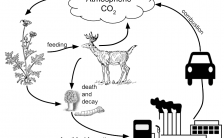
This graphic illustrates how atmospheric carbon dioxide is produced during cellular respiration and combustion and then taken up by plants. Students apply what they have learned about the processes of photosynthesis and respiration to label parts of the graphic an answer questions. This activity is probably best done as a pair-share activity or a…
-
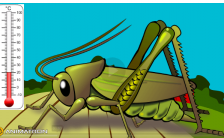
Investigation: What Factors Affect Cricket Chirps?
One of my favorite scientific method activities was a project that used a flash simulation to investigate cricket chirps and how the frequency is affected by temperature, humidity and wind speed. Unfortunately, flash is no longer supported by modern browsers. This alternative assignment asks students to listen (and count) cricket chirps, create a data…
-
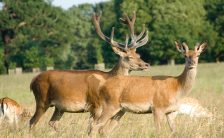
Investigation: Estimating Population Size
In this investigation, students simulate how mark and recapture techniques are used to estimate population size. Prepare populations in advance by gathering 60-150 small objects, like toy spiders, beans, or beads. Toy animals seem to be more exciting for students, and you can sometimes find them at dollar stores. In my class, I…
-
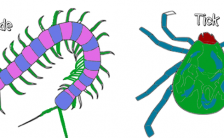
Comparing the Anatomy of Arthropods (Coloring)
This simple activity was designed for intro level biology (life science). Students read about different types of arthropods and learn what characteristics they share, such as an exoskeleton and segmentation. Then they reading focus on specific groups: insects, arachnids, crustaceans and centipedes. The goal is for them to learn that each group has a…