
Category: Genetics
-
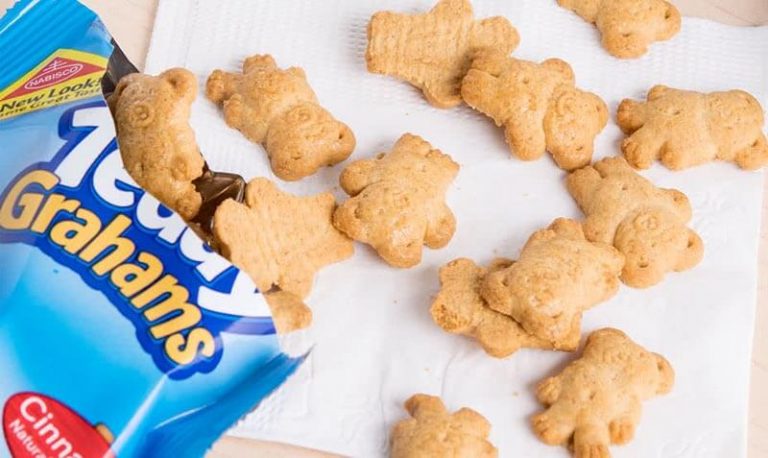
Teddy Graham Lab Modeling HW Equilibrium
Model Hardy Weinberg equilibrium using Teddy Grahams. Compare happy bears to sad bears.
-
Investigation: Gel Electrophoresis and DNA
This procedural lab is a great compliment for genetic studies where students learn about sex linked genes and mutations. The allele for Duchenne Muscular Dystrophy is located on the X chromosome and is associated with a deletion mutation for that region.
-
Investigation: Gene Switches in Stickleback Fish
This activity was modified from HHMI’s “Modeling the Regulatory Switches of the Pitx1 Gene in Stickleback Fish” The activity is presented as a type of investigation or case study where students examine regulatory switches and was a short film that describes the role of the Pitx1 gene in the development of spines. Students can work…
-
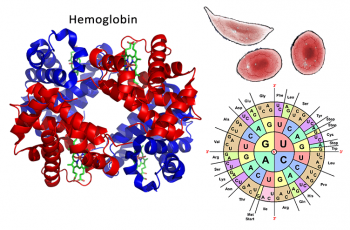
DNA, Proteins, and Sickle Cell
In this activity, students use a codon chart to compare the DNA sequence of HbA (normal hemoglobin) to HbS (sickle cell). The DNA differs in a single base, where the codon for normal hemoglobin codes for glutamine, and the mutant form codes for valine.
-
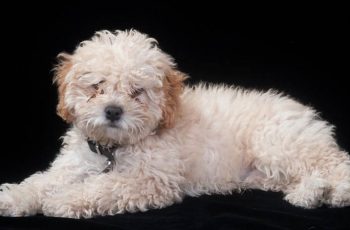
Dog SNPs and Curly Hair
In an effort to add more real data to the DNA (genetics) unit, I added a shortened form of the HHMI activity: “Mapping Genes to Traits in Dogs Using SNPs” The activity on HHMI is too advanced for freshman level biology, but I thought it would be a good introduction to DNA sequences. The activity…
-
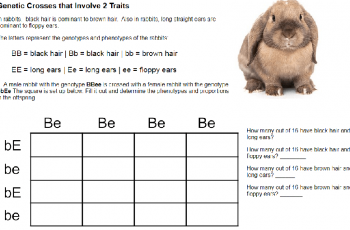
Genetic Crosses with 2 Traits with Rabbits
Beginning biology students can struggle with dihybrid crosses and setting up Punnett squares that have two traits. When tackling this concept, make sure students are familiar and competent with basic genetic crosses and setting up Punnett squares for a single trait. For example, a tall (Tt) plant is crossed with a short plant (tt). Once…
-
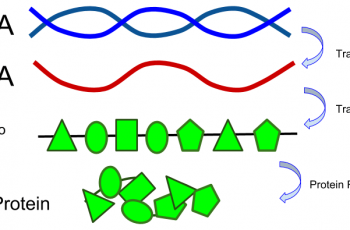
DNA, Proteins, and Mutations
Students explore how DNA becomes a function protein by using a codon chart to transcribe and translate a gene. They compare the gene found in humans to that found in other animals, deducing that the genes are very similar with only slight changes. Finally, students examine the different types of mutations and how a…
-
Dragon Genetics
Add a little fantasy to your genetics unit by having students practice doing genetic crosses using dragons as specimens. Dragon traits include fire breathing, wingless, and color. I have students practice on whiteboards as we work through the slides and then I have students share their solutions with the class. The level 2 questions include…
-
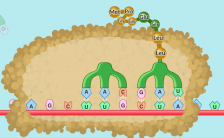
Manipulate DNA in a Simulation to Explore Mutations
This activity uses a simulation from the Concord Consortium. It shows how DNA is transcribed to RNA and then turned into a protein. It’s a very clear animation and can be used on its own as part of a lecture on protein synthesis. I have even used this as a demonstration to show protein folding…