
Category: Anatomy
-
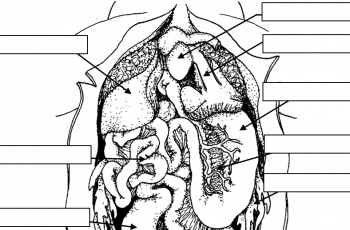
Frog Anatomy Label
This worksheet is intended to help students review the anatomy of the frog after they have completed the dissection of the frog. Images show the internal anatomy of the frog with blanks for students to fill in the names of structures, like the liver, intestine, lungs, spleen, and heart. Guide also compares the male and…
-
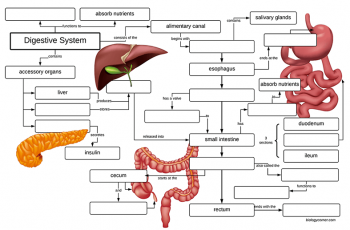
Digestive Concept Map
Students use this concept map to reinforce their understanding of the digestive system and how structures within that system are related. The mouth is where food is chewed and mixed with saliva. Saliva contains enzymes that start to break down food. The esophagus is a muscular tube that connects the mouth to the stomach. The…
-
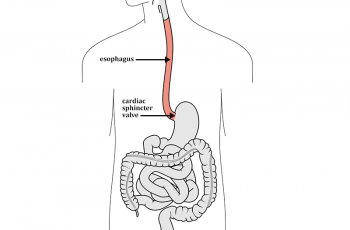
Investigation: Esophagus
This activity was designed for high school anatomy students, though it could easily be used in biology or even elementary school classes. The goal is for students to determine if water moves down the esophagus by gravity or by the action of the muscles, peristalsis. First, students measure the length of the esophagus with ruler…
-
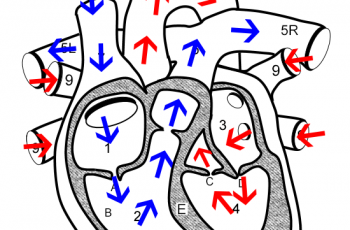
Anatomy of the Heart by Number
In this exercise, read about the structures of the heart and how blood flows through the systemic and pulmonary circuit. The text describes each structure (by number), you label with the names of the vessels and chambers of the heart. Use arrows to trace the flow of blood from the body, to the heart, then…
-
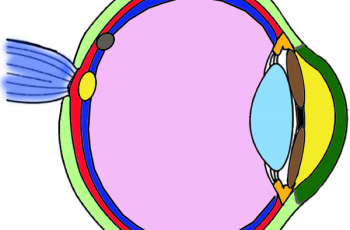
Anatomy of the Eye (Coloring)
The coloring worksheet is intended to help students learn the location of specific parts of the eye, like the cornea, sclera, lens, and retina.
-
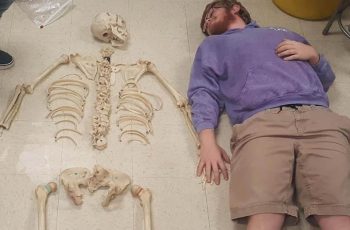
Estimate a Person’s Height from the Bones
In this activity, students use tape measures to estimate the length of their femur, ulna, and tibia. These lengths are then with an equation to estimate their height which can then be prepared to their actual height.
-
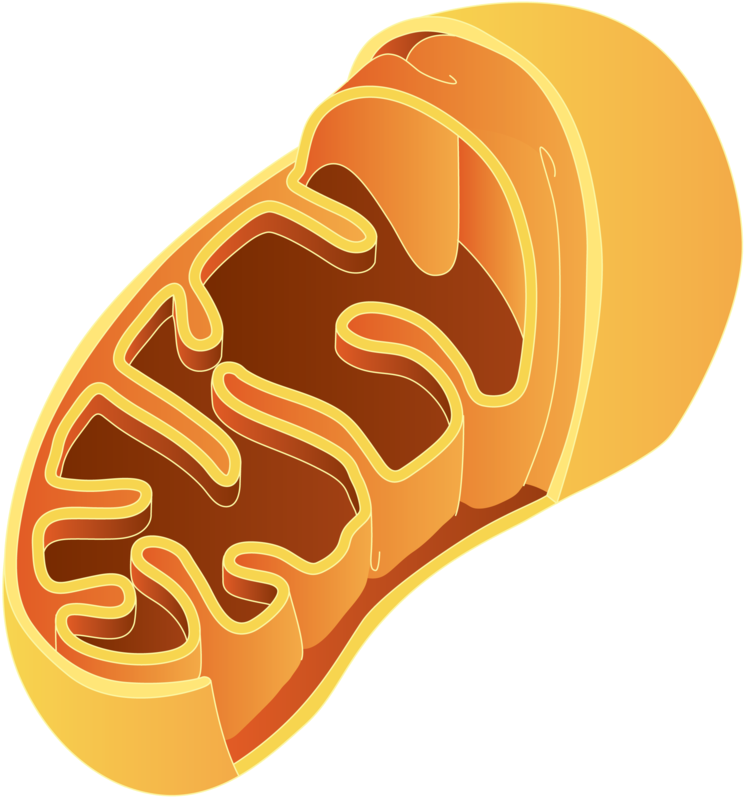
Mitochondria, DNA, and the Aging Process
This short article was designed for anatomy and physiology students studying the cell. The class focuses on how disease states can often be traced back to problems with cells. Senescence, or aging, has been linked to a build-up of mutations in mtDNA.
-
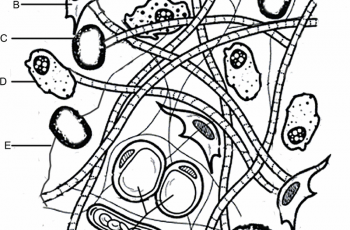
Color the Connective Tissue Matrix
This worksheet was designed for anatomy and physiology students to compliment a lesson on the body tissues. This coloring exercise is not intended to take very long and is mostly to help students gain an appreciation for the complexity of the matrix. The entire unit, which includes google slides and other resources can be seen…
-
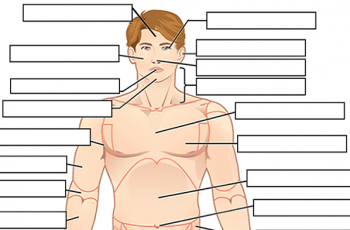
Label the Body Regions
This worksheet is used with a beginning anatomy unit that discusses anatomical terminology and body regions.
-
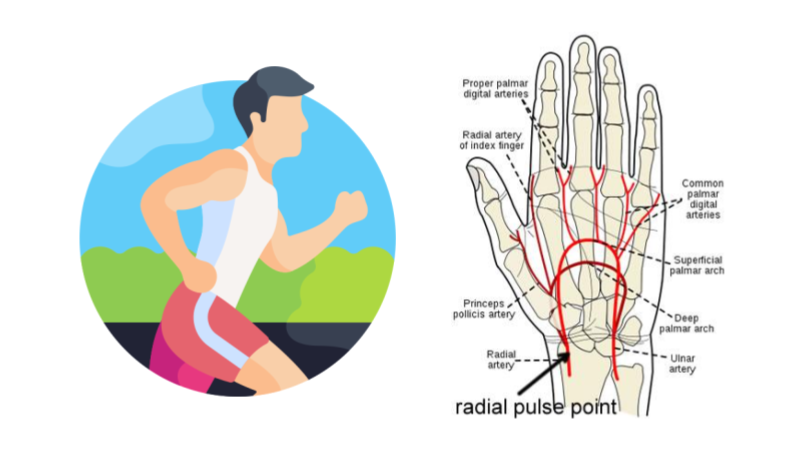
Investigation: How Does Exercise Affect Heart Rate
Design and conduct an experiment to measure the effect of exercise on heart rate. Aligned to NGSS standard on feedback mechanisms.
-

Body Systems Graphic Organizer
Graphic of the body systems where students fill in blanks about structures within the organ system and their functions. This concept map can be used as a review or as a way to organize notes over the body systems.
-
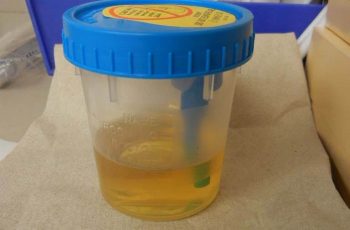
Urine Luck! – A Urinalysis Simulation
Examine urine samples from patients and suggest a diagnosis and treatment plan based on test results. Simulated urine, can be made with basic materials and models basic tests done on real urine.
-
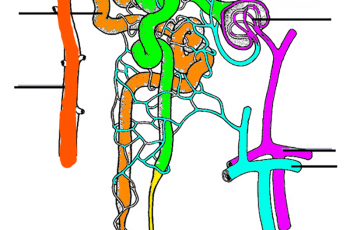
Color and Label the Nephron
Practice labeling the nephron with this reinforcement activity. Students can also color the image to identify the major structures of the nephron: glomerulus, bowman’s capsule, proximal and distal tubules, loop of Henle, collecting duct and capillaries. This was designed to go with a larger unit on how the urinary system and kidneys help the body…
-
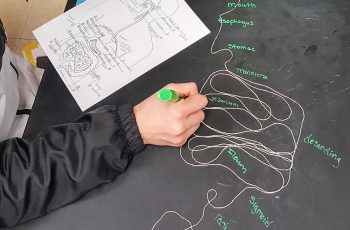
Modeling the Alimentary Canal
In this activity, students use string to model the gastrointestinal tract as a scale model. I’ve noticed that students do have difficulty with the concept of scaling, which is one of the crosscutting concepts listed in the NGSS. The directions give students measurements for a 1/3 scale model, the human alimentary canal is about 9…
-
Case Study: How Do Tibetans Survive High Altitudes
Based on the Berkeley website: Understanding Evolution, this version focuses on the how the body maintains homeostasis at high altitudes. This involves increased production of red blood cells to improve oxygen supplies to tissues. Tibetan populations have adapted to high altitudes by producing fewer red blood cells which improves fetal mortality rates. Case looks…