

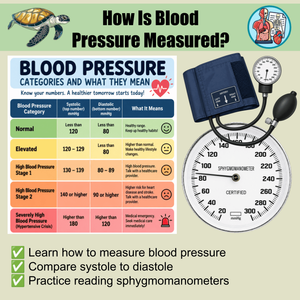
Understanding blood pressure is a great way to connect the cardiovascular system to a familiar medical procedure. In this activity, students learn what blood pressure measures and how to measure blood pressure. Then they explore what the systolic and diastolic numbers represent.
Students begin with a short reading that introduces important terms such as systole, diastole, mmHg, and sphygmomanometer. Comprehension questions help reinforce how pressure changes as the heart contracts and relaxes. Then they’ll discover why a blood pressure measurement contains two numbers.
The second part of the activity gives students hands-on practice interpreting a sphygmomanometer dial. Students examine a series of realistic gauge images with the pointer positioned at different pressures and determine the reading in mmHg. This gives them practice reading an analog scale while reinforcing the units used to measure blood pressure.
This activity works well in an Anatomy & Physiology cardiovascular unit or a health science class. It can also be paired with a classroom blood pressure lab so students understand the equipment and terminology before taking actual measurements.
The downloadable activity includes reading and comprehension questions. In addition, students practice sphygmomanometer reading. This activity is a great precursor for students learning how to take their blood pressure.
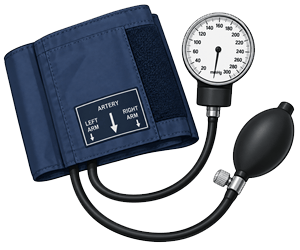
Related Resources
Anatomy Unit on the Circulatory System – All the resources I use in my anatomy class for this unit
Blood Pressure Lab – Students use a sphygmomanometer and a stethoscope to measure their own blood pressure
Sheep Heart Dissection – a guide to dissection the sheep heart
Virtual Heart Dissection – for students who miss the heart dissection in class
Heart Model – use this heart model to show students a 3D version of the human heart