
Category: Evolution
-

Case Study: How Do Tibetans Survive High Altitudes
Based on the Berkeley website: Understanding Evolution, this version focuses on the how the body maintains homeostasis at high altitudes. This involves increased production of red blood cells to improve oxygen supplies to tissues. Tibetan populations have adapted to high altitudes by producing fewer red blood cells which improves fetal mortality rates. Case looks…
-
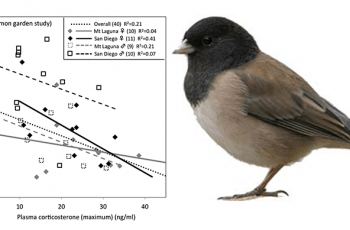
Data Analysis: Funky Juncos
View a short video about how a group of birds split from the main population and evolved in relative isolation near a college campus. The film is is 88 minutes long and all of its parts can be viewed at the Juncoproject.com, though for this activity, only one 16 minute chapter is viewed. The…
-
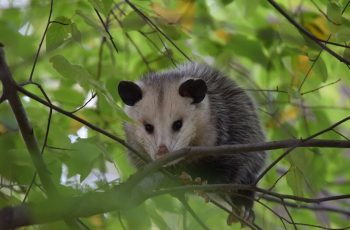
Data Analysis: Virginia Opossum and Color Variations
Students examine scatter plots that show phenotype variations among opossums in North America, exhibiting variations in coat color, ear length, and size.
-
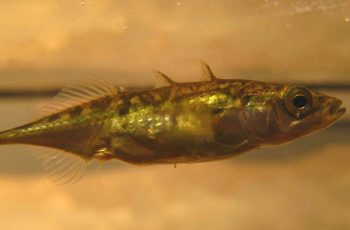
Investigation: Gene Switches in Stickleback Fish
This activity was modified from HHMI’s “Modeling the Regulatory Switches of the Pitx1 Gene in Stickleback Fish” The activity is presented as a type of investigation or case study where students examine regulatory switches and was a short film that describes the role of the Pitx1 gene in the development of spines. Students can work…
-
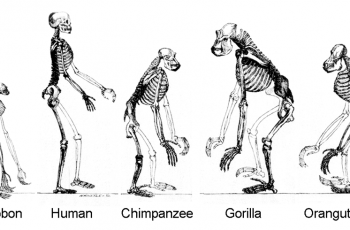
Evolution: Fact, Fiction, or Opinion
This lesson can be used to introduce evolution and establish what your students already understand (or misunderstand) about evolutionary theory. Statements can be printed and cut into slips and students work in small groups to categorize each statement as either Fact, Fiction, or Opinion. The included answer key has quick explanations as well…
-
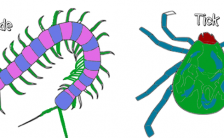
Comparing the Anatomy of Arthropods (Coloring)
This simple activity was designed for intro level biology (life science). Students read about different types of arthropods and learn what characteristics they share, such as an exoskeleton and segmentation. Then they reading focus on specific groups: insects, arachnids, crustaceans and centipedes. The goal is for them to learn that each group has a…
-
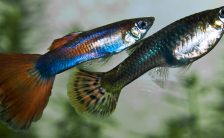
Case Study: How Did the Guppy Get His Color?
This case study examines evolution in guppies as evidenced by color variation in populations. It is based on an iconic study performed by John Endler where he collected data on guppies by scoring the size, number, and brightness of spots. Students progress though the slides (lecture and discussion), and examine details of Endler’s study, such as where…
-
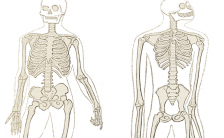
Compare a Human and Chimpanzee Skeleton
This handout can be used in discussions on the evolution of bipedalism or in any unit on the skeletal system. Students label the bones of the skeleton and make comparisons between the forelimbs, hind limbs, and pelvis. I created this handout to compliment an evolutionary lesson and video from HHMI on the “Origin of Humans”…
-
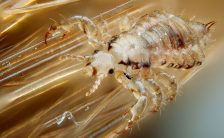
Case Study – Lice and Human Evolution
Google slides present a case of human evolution and the evolution of body lice. Students read details and data and answer questions in small groups.