
Category: Cell Biology
-
Investigation: How Do Enzymes Work?
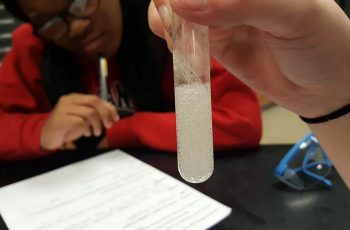
This lab is fairly basic, but when given with guided instruction how enzymes catalyze reactions, students can have a hands-on experience into how proteins are related to function.
-
Investigation: How Can Diffusion Be Observed?
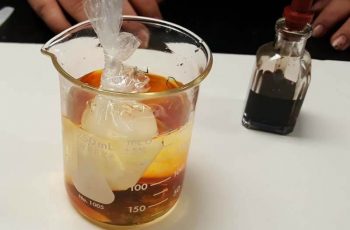
This investigation provides a hands-on way to observe what happens when a chemical moves across a semipermeable membrane. In this case, a cheap plastic bag serves as a model for the cell membrane and shows that iodine will move into the bag and turn the contents purple.
-
Create a Concept Map of Biomolecules
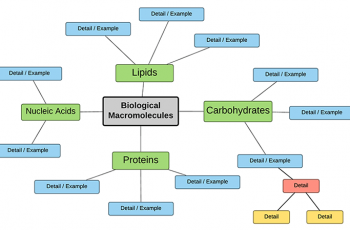
This activity asks students to work in groups to create a concept map (graphic organizer) on the biological macromolecules: carbohydrates, lipids, fats, and nucleic acids. Students are given brief instructions and a sample map to get them started, but they are responsible for determining what details are important in each section.
-
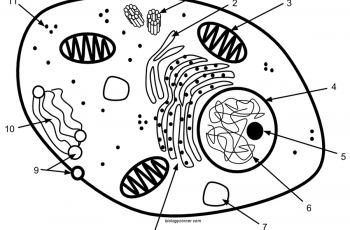
Cell Labeling: Simple and Complex
Students practice labeling organelles on a simple model (2D) and a more complex model. The idea is for students to gain an appreciation for how cell diagrams are created. They don’t all look alike, and are often artistically created. Cell organelles tend to follow basic design rules, like the mitochondria will generally look like a…
-
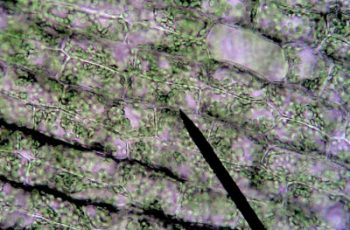
Using Anchoring Phenomenon with Lessons
Start lessons on osmosis with an activity and anchoring phenomenon. View cells exposed to salt and observe how they change!
-
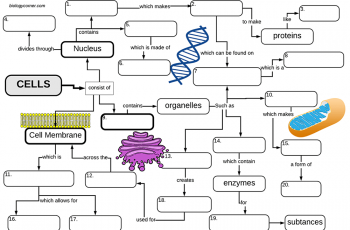
Cell Structures: A Graphic Organizer
This graphic organizer (concept map) organizes the cell structures around three main parts of the eukaryotic cell: the nucleus, cytoplasm, and cell membrane.
-
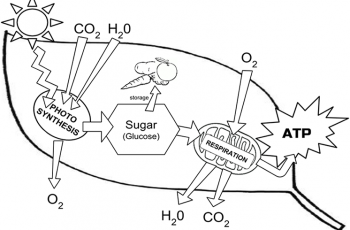
Photosynthesis Coloring
Students read short text passages and then color images to help them relate the textual information with the graphic.
-
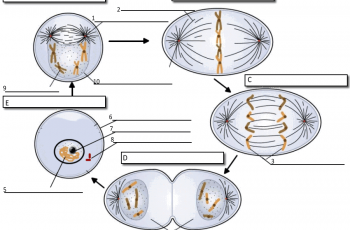
Cell Cycle Labeling
Students label the image of a cell undergoing mitosis and answer questions about the cell cycle.
-
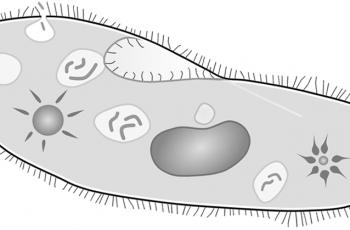
Comparing the Ameba to the Paramecium
With the adoption of NGSS, I’ve had to make cuts to some of the lessons that biology classes of the past enjoyed. I was sad to see it go, but we no longer do a unit on the Kingdom Protista, but I still manage to fit a microscope lab into other sections.
-
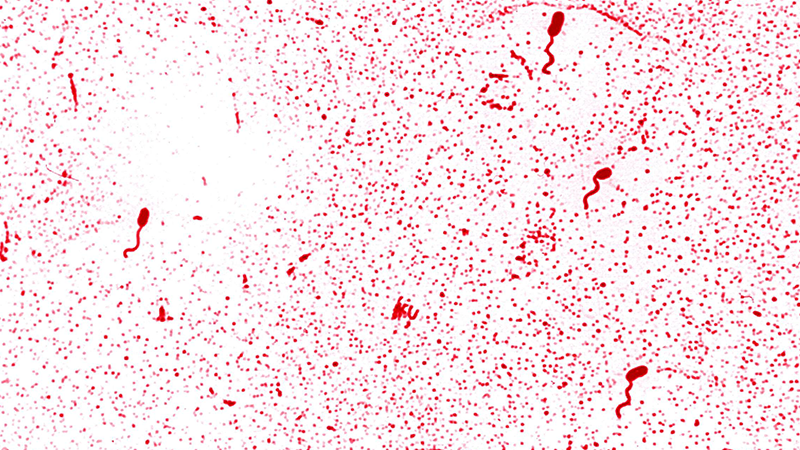
Case Study: How to Survive a Cholera Epidemic
In this case, students explore how cholera is spread and how it affects the body. The case is divided into four sections, with the first part focusing on the role of clean water supplies and the spread of bacteria. In the second part, the affects of the bacteria are examined, with attention on how the…
-
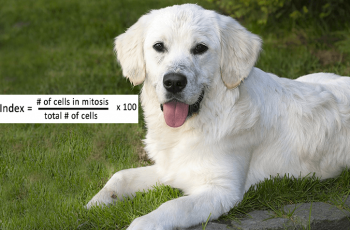
Investigation: Mitosis and Cancer Cells
The first part of this investigation, students examine slides of mitosis in an onion root tip and count the number of cells in each phase of the cell cycle. An equation is then used to estimate the percentage of time the cell spends in each phase and students create a bar graph to display results. …
-
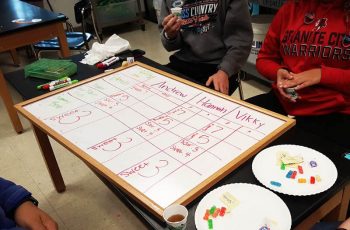
Investigation: Taste Buds and Signal Transduction
As a part of the chapter on cell signal pathways, students perform a lab that examines how their taste buds are affected by Gymnema. For this lab, I simply placed a question on the board “How does Gymnema tea affect your ability to taste sweet foods?” I provided them with a list of…
-
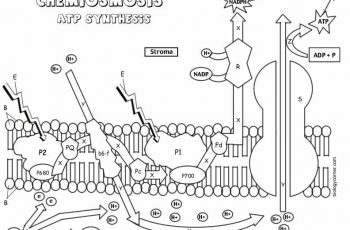
Photosystems and Chemiosmosis Coloring
Use this coloring worksheet to explore how plant cells harvest energy form the sun to generate ATP in the process known as chemiosmosis.
-
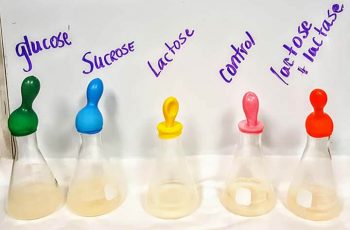
Demonstration: Can Yeast Digest Lactose?
This activity can be performed as student lead inquiry lab or as a class demonstration activity. Students should have a basic understanding of how enzymes work and the relationship between lactose and lactase. If you use Openstax, this is a great lesson to bridge the chapter on enzymes to the next one on respiration and…
-
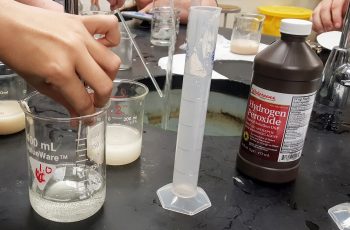
Investigation: Enzyme and Substrate Concentrations
Students who complete the Enzyme Investigation lab can further explore enzymes with this lab on how concentrations of the substrate (hydrogen peroxide) and the enzyme ( catalase) can affect the rate of reaction. In the first experiment, students simply made a judgement about the amount of bubbling to indicate reaction speed, though this is a…