
Category: Cell Biology
-
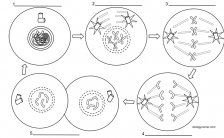
Mitosis Coloring
Students read about each of the phases of the cell cycle and label and color a diagram that shows details of interphase, prophase, metaphase, anaphase, and telophase. Students must also label cell structures like the centrioles, aster, spindle, and nuclear membrane. This worksheet can be used as reinforcement for a lesson on mitosis and…
-
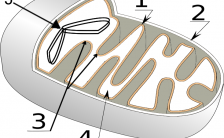
How Mitochondria Produce Energy for the Cell
This worksheet is intended for basic biology students to learn how cellular respiration provides energy for the cell. Students color a mitochondrion which shows how the inner membrane is folded into cristae and indicates that mitochondria are organelles that have their own DNA. Finally, students examine the equation for respiration and compare it to…
-
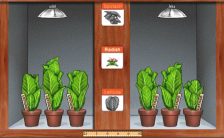
Photosynthesis Lab – How Light Color Affects Growth
A virtual simulator that shows how plant growth changes in response to the color of light. Students measure the heights of plants grown under different colors.
-
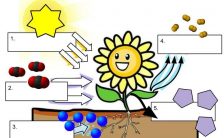
How Does Photosynthesis Work?
This handout can be used with a lecture on photosynthesis, where students label the main features of the light-dependent reaction and the Calvin cycle.
-
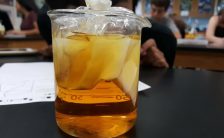
Investigation: Observing Diffusion & Semi-Permeable Membranes
Units on the cell will also include lessons about how the cell transports materials across the membrane. For beginning biology students who don’t have a strong foundation in physical science, the ideas of entropy, solutions, and concentrations can be overwhelming. Diffusion is easy to explain with a perfume bottle or food coloring. …
-

Toxicology Resources for the Biology Class
Resources for investigating how poison affects animal physiology. Students can read the “Poisoner’s Handbook” and perform experiments on worms.
-

Case Study: John Snow and the Origin of Epidemiology
This case study explores a time before the Germ Theory when doctors were uncertain how disease was spread. Current models, such as the humoral or miasma model could not fully explain how cholera infected some households, but not others. This case story explores London, England in 1854 after an outbreak of cholera which had…
-
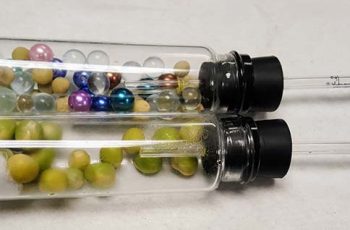
Investigation: Cellular Respiration
Students set up respirometers to measure the oxygen consumption of germinating peas in cold and warm water, and compared to a living organism.
-
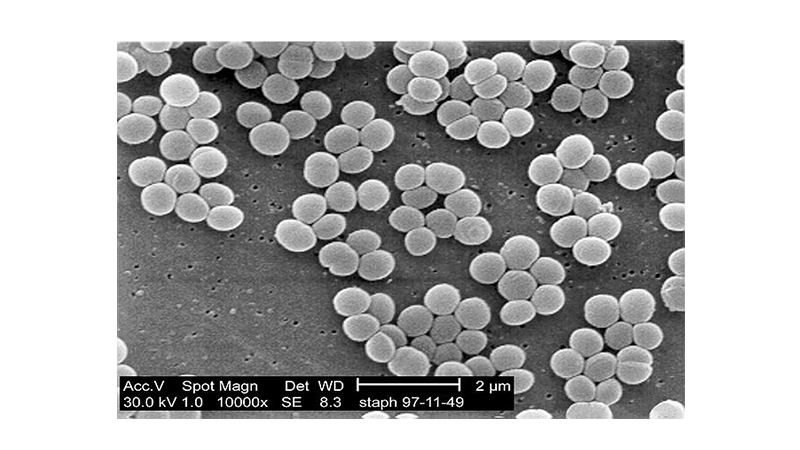
Case Study – Are Nanobacteria Alive?
In this case study, students review the evidence of scientists on both sides of the controversy questioning whether nanobacteria are living organisms.