
Category: Anatomy
-
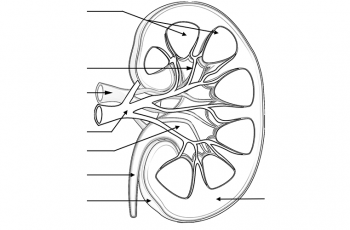
Label and Color the Kidney
This worksheet has a very simplified view of a kidney showing the cortex, renal pyramids, renal artery and vein, renal pelvis, and ureter. Students can practice labeling the structures and color coding the diagram. This worksheet was designed for a high school anatomy and physiology class and complements two other labeling and coloring worksheets: urinary…
-
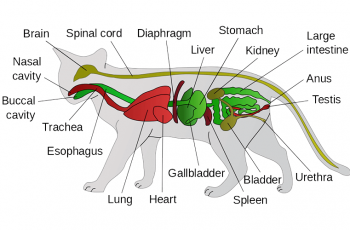
Complete Cat Dissection Student Guide
Cat dissection manual for anatomy and physiology students. A cat dissection is not usually performed in biology and reserved for upper level anatomy or college students. My anatomy class is only available for juniors and seniors. Some students may have ethical issues with dissections, and I refer them to an alternate version for the dissection…
-
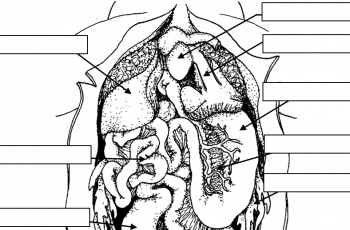
Frog Anatomy Label
This worksheet is intended to help students review the anatomy of the frog after they have completed the dissection of the frog. Images show the internal anatomy of the frog with blanks for students to fill in the names of structures, like the liver, intestine, lungs, spleen, and heart. Guide also compares the male and…
-
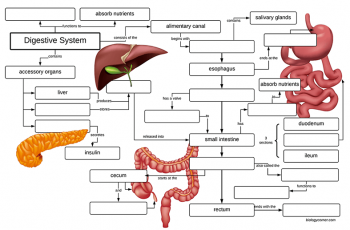
Digestive Concept Map
Students use this concept map to reinforce their understanding of the digestive system and how structures within that system are related. The mouth is where food is chewed and mixed with saliva. Saliva contains enzymes that start to break down food. The esophagus is a muscular tube that connects the mouth to the stomach. The…
-
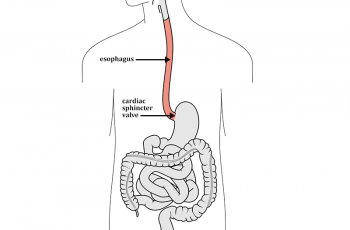
Investigation: Esophagus
This activity was designed for high school anatomy students, though it could easily be used in biology or even elementary school classes. The goal is for students to determine if water moves down the esophagus by gravity or by the action of the muscles, peristalsis. First, students measure the length of the esophagus with ruler…
-
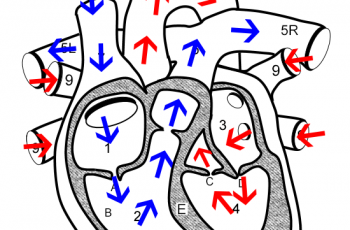
Anatomy of the Heart by Number
In this exercise, read about the structures of the heart and how blood flows through the systemic and pulmonary circuit. The text describes each structure (by number), you label with the names of the vessels and chambers of the heart. Use arrows to trace the flow of blood from the body, to the heart, then…
-
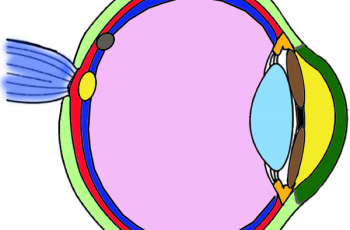
Anatomy of the Eye (Coloring)
The coloring worksheet is intended to help students learn the location of specific parts of the eye, like the cornea, sclera, lens, and retina.
-
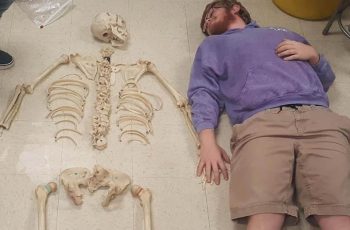
Estimate a Person’s Height from the Bones
In this activity, students use tape measures to estimate the length of their femur, ulna, and tibia. These lengths are then with an equation to estimate their height which can then be prepared to their actual height.
-
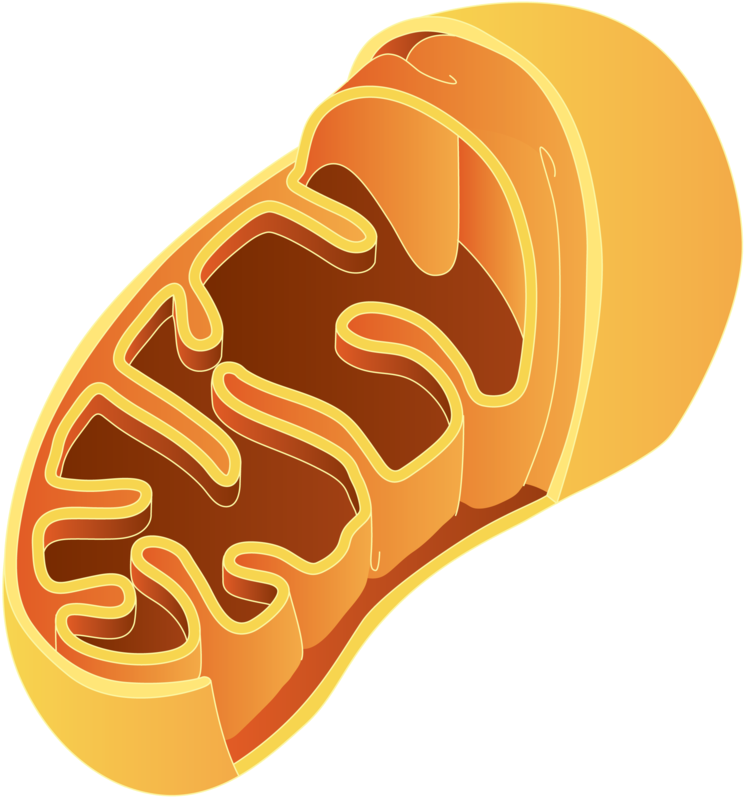
Mitochondria, DNA, and the Aging Process
This short article was designed for anatomy and physiology students studying the cell. The class focuses on how disease states can often be traced back to problems with cells. Senescence, or aging, has been linked to a build-up of mutations in mtDNA.