
Helping students understand evolution, gene flow, and speciation can be challenging because these processes often occur over long periods of time and involve complex genetic evidence. One effective way to make these concepts more engaging is to use real scientific research simplified for classroom use. The Fanged Frog Genomics Study activity introduces students to modern evolutionary biology while reinforcing key concepts such as cryptic species, gene flow, phylogenetic trees, and the gray zone of speciation.
Bringing Real Science into the Classroom
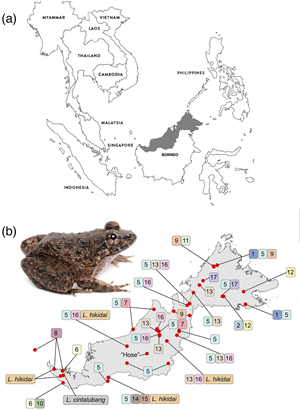
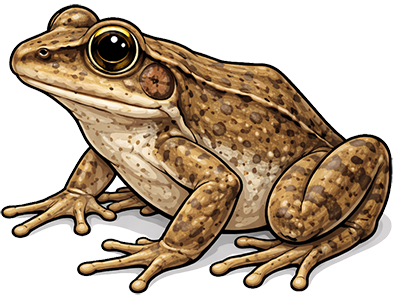
This classroom resource is based on a recent genomics study examining a group of Southeast Asian frogs known as fanged frogs (Limnonectes kuhlii complex). These frogs earned their name because some males possess small fang-like projections on their lower jaw. They live along streams in Borneo and have mottled brown or gray coloring that helps them blend into the forest floor. Although they appear nearly identical to one another, earlier genetic studies suggested that this group might contain many different species.
Scientists originally proposed that there could be more than a dozen separate species in this group. However, newer research using genome-wide data revealed a more complex story. When researchers examined thousands of genes across the frogs’ genomes, they discovered that many of the supposed species were still exchanging genes. Instead of representing fully separate species, several populations were in what scientists call the “gray zone” of speciation—a stage where populations are diverging but have not yet completely stopped interbreeding.
This finding provides an excellent example for students learning about how speciation is not always a clear-cut process.
Connecting the Study to Evolution Concepts
This activity works particularly well in a unit on evolution, population genetics, or biodiversity. Students explore how scientists determine whether populations represent separate species and how genetic evidence can change our understanding of biodiversity.
Key concepts reinforced in this lesson include:
- Gene Flow – the movement of genes between populations through interbreeding
- Speciation – the formation of new species over evolutionary time
- Cryptic Species – species that appear physically identical but are genetically distinct
- Phylogenetic Trees – diagrams that show evolutionary relationships
- Taxonomic Inflation – when scientists mistakenly identify too many species
Students also learn that using only one type of genetic evidence, such as mitochondrial DNA, can sometimes lead to incorrect conclusions. Genome-wide data provides a more complete picture of evolutionary relationships.
What Students Do
In this resource, students work through a short reading that explains the study in accessible language. The worksheet includes several activities designed to reinforce comprehension and encourage scientific thinking:
- Vocabulary Matching – students match key evolution terms with definitions
- Figure Analysis – students examine a phylogenetic tree from the study
- Discussion Questions – students analyze the role of gene flow and speciation
- CER Writing Prompt (Claim–Evidence–Reasoning) – students construct an argument about whether genetically different populations should be considered separate species
These components help students practice interpreting scientific evidence, a key skill emphasized in modern science standards.
Related Resources
Frog Dissection Resources – everything you need to complete a frog dissection with your class
Student Guide to Frog External Anatomy – part one of the frog dissection examines the external anatomy of a grass frog
Speciation Modes – explore different types of speciation with this graphical exercise
Big Birds Get No Love – explore speciation of finches on Daphne Major
Why Can’t We Be Friends – simple worksheet where students identify types of isolation mechanisms, such as behavioral or temporal