
Tag: protein
-
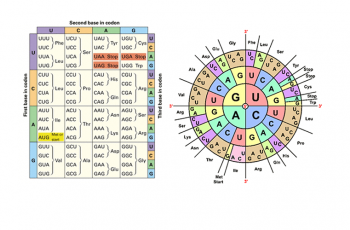
Protein Synthesis Practice Using Codon Charts
Practice using a codon chart to determine amino acid sequences from DNA.
-
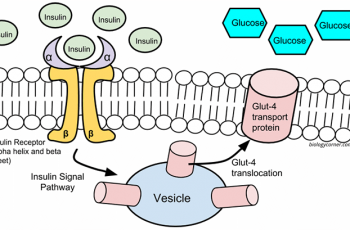
How is Glucose Taken Up by Cells?
This worksheet takes a closer look at the cell membrane and how insulin binds to the receptor on the cell membrane which creates a signal cascade, resulting in the movement of the Glut-4 transport protein to the surface of the cell. Students interpret a graphic showing the membrane, receptors, and the Glut-4 transport protein.
-
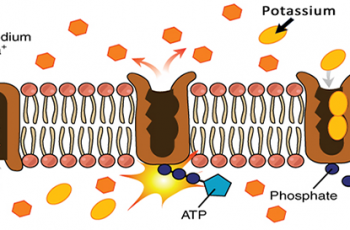
Cell Membrane Captions
Students examine images of transport across the cell membrane and identify key features such as the phospholipid bilayer, channel proteins, and receptors. Students then provide a title, such as “osmosis” and create a caption that describes the process being shown.
-
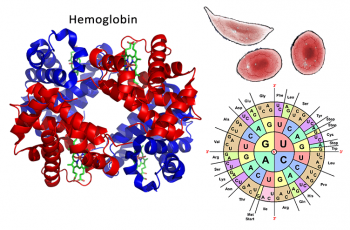
DNA, Proteins, and Sickle Cell
In this activity, students use a codon chart to compare the DNA sequence of HbA (normal hemoglobin) to HbS (sickle cell). The DNA differs in a single base, where the codon for normal hemoglobin codes for glutamine, and the mutant form codes for valine.
-
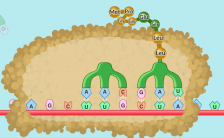
Manipulate DNA in a Simulation to Explore Mutations
This activity uses a simulation from the Concord Consortium. It shows how DNA is transcribed to RNA and then turned into a protein. It’s a very clear animation and can be used on its own as part of a lecture on protein synthesis. I have even used this as a demonstration to show protein folding…
-
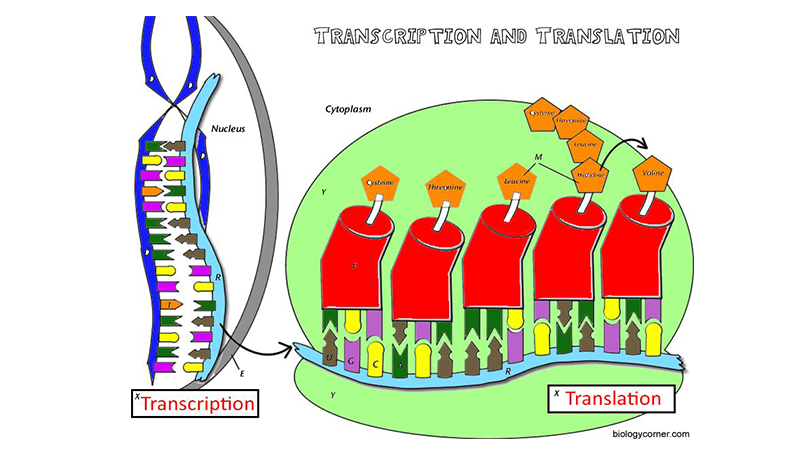
Learn Transcription and Translation by Coloring
Graphic shows the process of transcription and translation. Color the parts of the model as your learn about them!