
Search results for: “science graph”
-
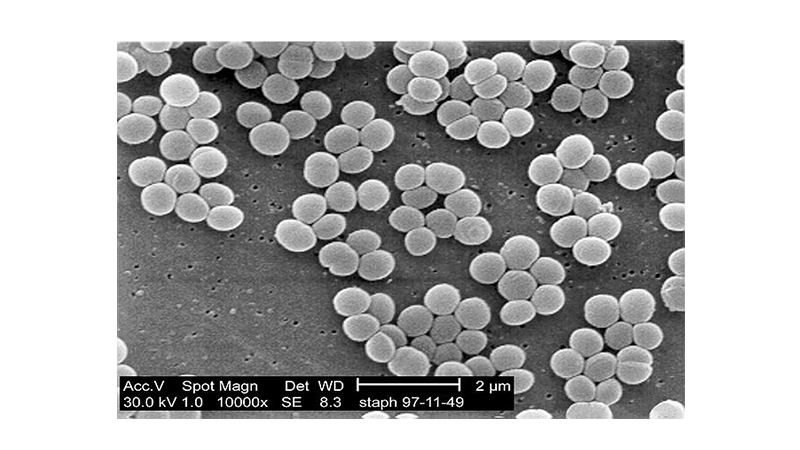
Case Study – Are Nanobacteria Alive?
In this case study, students review the evidence of scientists on both sides of the controversy questioning whether nanobacteria are living organisms.
-

Summarizing Articles with a Framing Guide
Students read scientific articles or journals and write a summary using this framing guide. Essays ensure students have read and understood the content.
-
Investigation: Osmosis and Water Potential
Students models osmosis using dialysis tubes that contain different concentrations of sucrose. The tubes will gain water dependent upon the molarity of solution they are placed in. You can make sucrose solutions with table sugar, and instructions are included in the teacher’s guide to the lab. The second part of the investigation determine the…
-
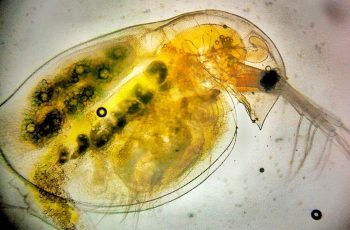
Investigation: What Factors Affect the Heart Rate of Daphnia
This investigation starts with a guided procedure where students gather data on the heart rate of daphnia when the organism is exposed to 1% ethanol. Daphnia are tiny crustaceans that are visible with the naked eye, though a microscope or stereoscope will be needed to see their heart rate.
-
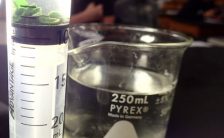
Investigation: Photosynthesis and Leaf Discs
As photosynthesis takes place, oxygen is released and causes the leaf to float. The number of floating disk is a measure of the rate of photosynthesis.
-
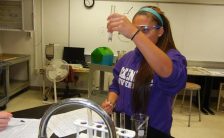
Investigation: Enzymes Activity with Catalase
Have you ever noticed that when you pour hydrogen peroxide on a wound, it bubbles? The reason is that bacteria and your own tissue contains an enzyme that breaks down the peroxide. Peroxide splits into a molecule of water and a molecule of oxygen, which causes the bubbles. In a series of tests, students observe…
-
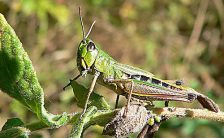
External Anatomy of the Grasshopper
Dissection guide for the grasshopper. Focuses on the external anatomy: legs, mouth parts, segments, includes a labeling and coloring.
-
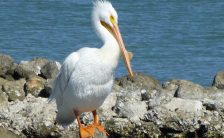
What Can Bird Beaks Tell You About Their Lifestyle?
Worksheet showing bird images where students determine their lifestyle based on the shape of their beaks and feet.
-

Case Study: How Do Bacteria Become Resistant?
Students analyze data regarding methicillin and penicillin resistant bacteria, focusing how hospitals inadvertently drive the evolution of resistant strains. Each section of the case explores an aspect of dealing with bacteria, including sanitation, analyzing agar plates uses the Kirby-Bauer disk method and concludes with students suggesting plans for reducing the incidence of MRSA in hospitals. With…
-

Investigation: What Are the Different Types of Cells?
Students look at cells from different domains and kingdoms; compare the size of cells and how their structure and shape differ depending on their function.
-

Case Study – Chicago Cyanide Murders
Students investigate how cyanide interferes with the mitochondria and the role of oxygen in cellular respiration; based on an historical event.
-
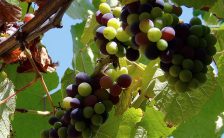
Investigation: How Much Water Is In a Plant?
Students compare the amount of water in three types of plants: a root (carrot), a fruit (grape) and a leaf by weighing samples and dehydrating them overnight.
-
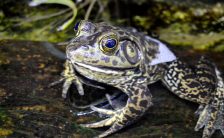
Case Study – Are Invading Bullfrogs Harmful?
Students follow a story about an ecologist and a student who are studying the population size of bullfrogs in California. These amphibians are considered an invasive species in that area and have been causing the decline of native species. Students learn concepts related to community interactions and learn one species can cause the decline…
-

Investigation: Temperature and Fish Respiration Rate
Students investigate what happens to the respiration rate of a fish as the temperature is decreased. Analyze data and create a graph.
-

Investigation: What Factors Influence Evolution
Explore the relationship between mutation, selection strength and the rate of evolution by using a simulation, which shows how a population evolves.