
Category: Worksheets
-

Investigation: Villi Height
Use a Netlogo simulation to observe how different heights of villi within the intestine affect absorption rate. Change the height of villi or size of food.
-
Human Population Growth
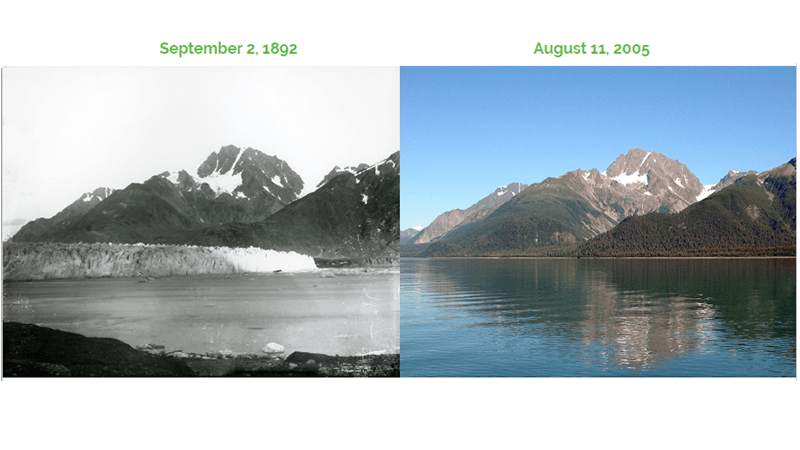
This activity was designed for home school during the Covid-19 pandemic. Students were completing a unit on ecology and had already done activities on trophic cascades. In this activity, students explore an interactive map and timeline that showcases major events in human history that impacted human populations, events like plagues or the development of new…
-

Saving a Fussy Predator, the Lynx
Read an article about the reintroduction of the lynx in Europe. A lynx is a type of feline. They are specialists, meaning that is has a very specific diet, the rabbit. Introducing the lynx poses challenges, but many people welcome its return. They are large cats, and can also pose a danger to livestock and…
-
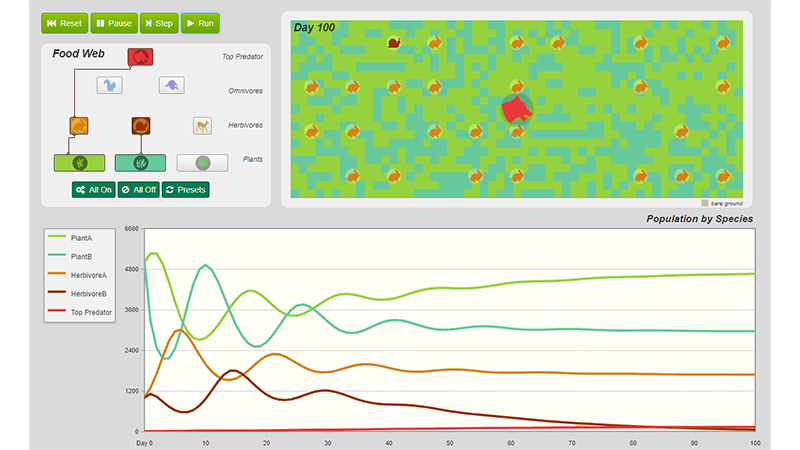
Predator Prey Simulation
Interactive program allows students to manipulate the type of organisms within a system and what they eat.
-
Evolution of Caffeine
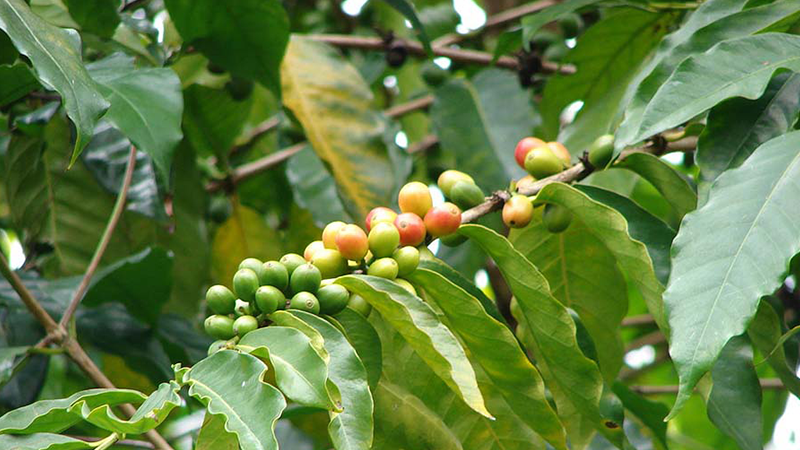
In this activity, students access a database called UniProt that provides information about protein sequences derived from genome sequencing. Students search for the protein sequences of three plants that produce caffeine, Camellia sinensis, Coffea arabica, and Theobroma cacao (tea, coffee, and cocoa). They compare the protein sequences to determine if the gene to create caffeine arose independently…
-

Biological Magnification
This article discusses how toxic substances accumulate in top predators in an ecosystem, a phenomenon called biological magnification. This accumulation can have dire effects on those populations and can threaten the entire species with extinction. Students read background information on mercury and DDT and how those toxins are measured in PPM (parts per million). A…
-
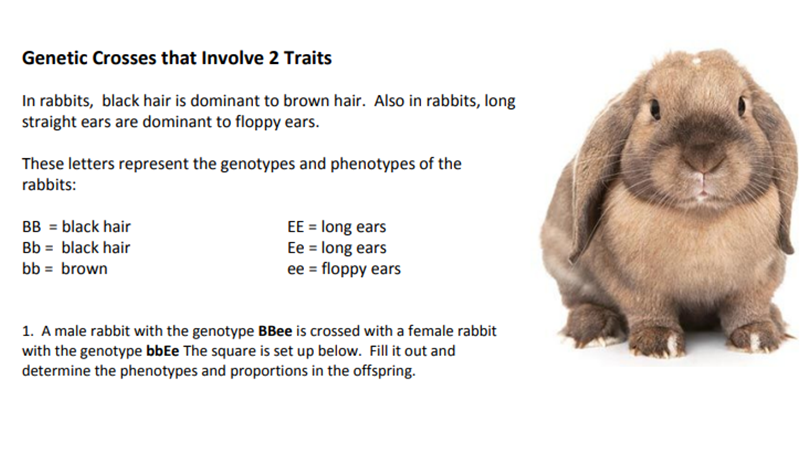
Genetics – Lop Ears
This worksheet allows students to practice doing genetic crosses that involve two traits. The first problem has the 4×4 Punnet square already set up. Once they fill out the square, they determine how many of the bunnies have floppy or long ears, and how many have black or pink noses. Note, these genetic traits are…
-
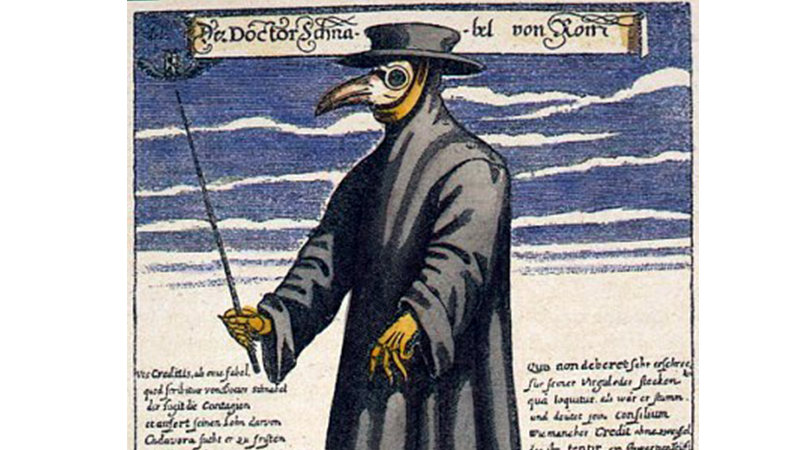
Infectious Disease Project
Create an infographic, poster, or pamphlet that instructs the public about a disease. Choose a historic disease, like bubonic plague and develop a presentation.
-

The Calvin Cycle
TED-ED video on the Calvin Cycle explains how the cycle works to create glucose. Students complete questions and label a diagram of the Calvin Cycle.
-
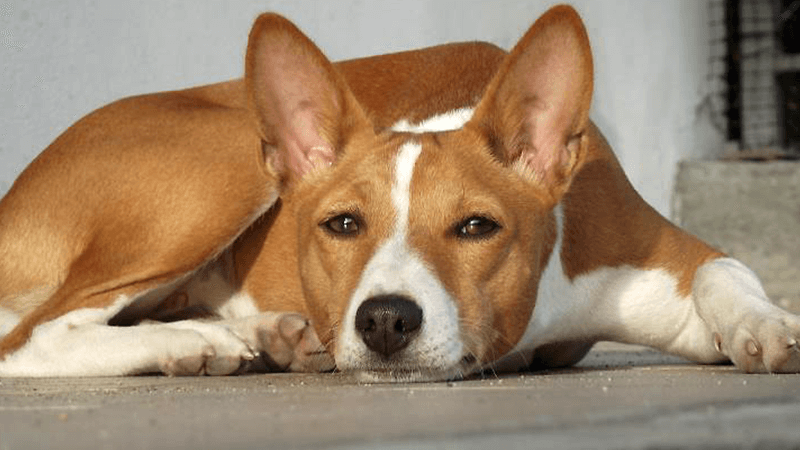
Dog Tales – NOVA
Worksheet for the NOVA program “Dog Tales” which explores the evolution and domestication of dogs. Includes multiple choice questions with a final reflection.
-
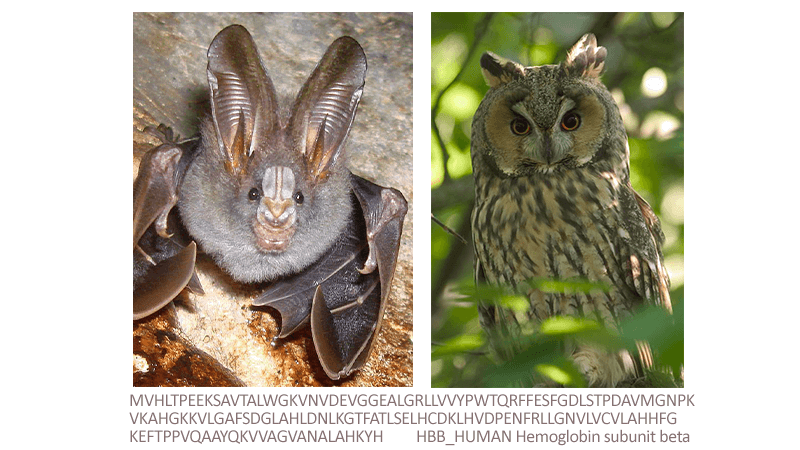
Are Bats Birds?
This activity gives AP students the opportunity to work with the protein database: UniProt by sequencing the protein hemoglobin in bats, birds, and other mammals.
-
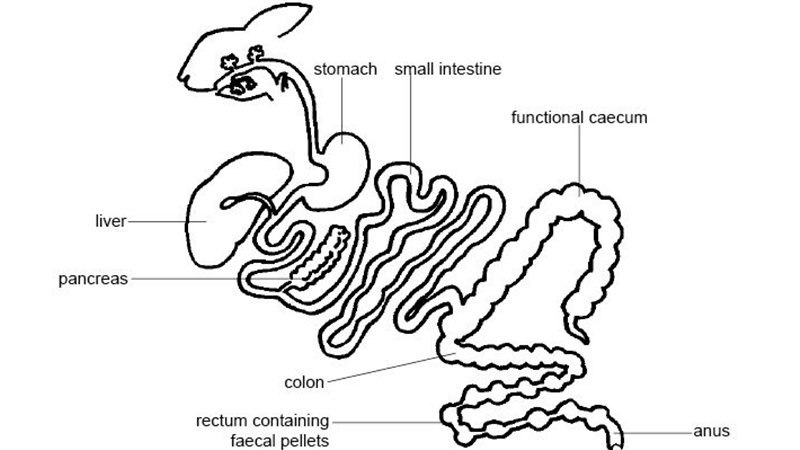
Label the Digestive System of a Rabbit
Students in biology may or may not do extensive dissections, but most biology classes do include a unit on comparative anatomy. Many teachers substitute dissections with virtual labs or paper versions of dissections where students label, color, or cut out parts. This worksheet shows a simplified diagram of a human and a rabbit digestive system…
-
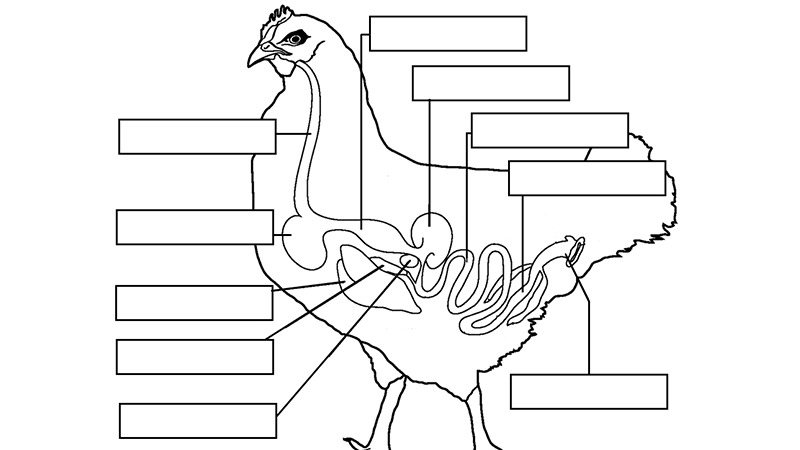
Bird Digestive System
This worksheet provides an image of a chicken focused on the digestive system as part of an overall unit on comparative anatomy. Students label the major organs of the system which are similar to the human and frog. The chicken does have some digestive system adaptations , such as a crop, proventriculus, and gizzard, which…
-
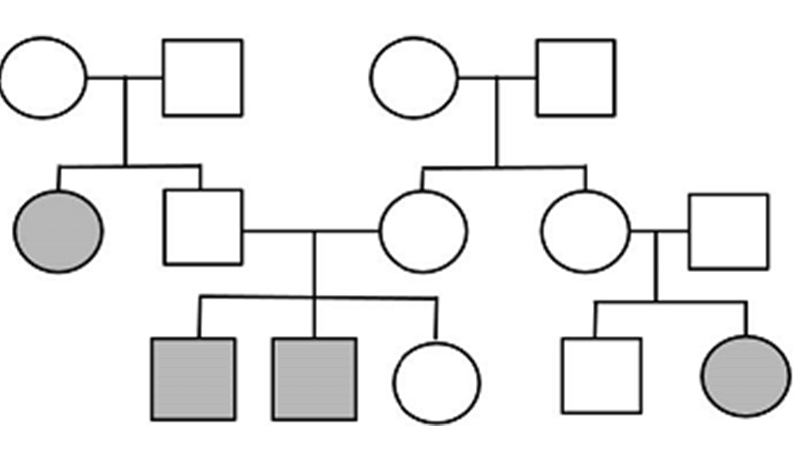
Pedigree Analysis – AP Bio
Designed for biology students studying genetics. Determine the inheritance pattern for human disorders, like Tay-Sachs or Marfan Syndrome.
-
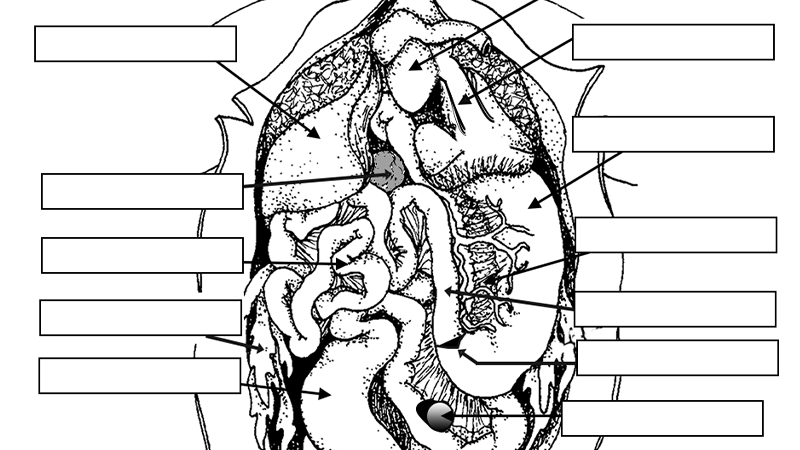
Frog Anatomy Label
This worksheet is a supplement to the frog dissection activity where students examine a preserved specimen. The main structures of the abdominal cavity are shown on this image and students practice identifying them using the included word bank. ( The worksheet could be modified to not include it should students need a greater challenge. )…