
Category: Worksheets
-
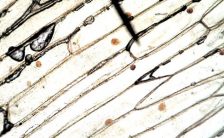
Comparing Plant Cells
Students observe onion cells and elodea cells using the light microscope. Students compare structures found in each type of cell and create drawings.
-

Observing Human Cheek Cells with a Microscope
In this lab, students use a toothpick to get a sample of cells from the insides of their cheek, stained with methylene blue.
-
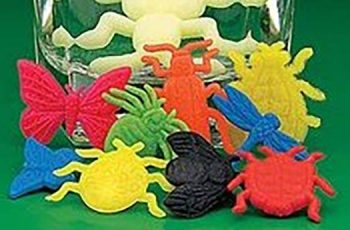
Growing Sponge Animals
This simple activity provides an introduction to laboratory techniques and data collection. Students measure how a sponge animal toy grows when submerged in cold and warm water.
-
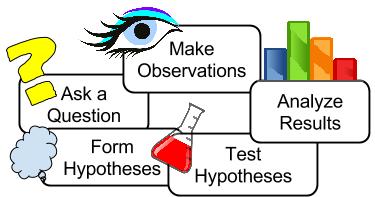
Investigation: What Are the Processes of Science
Inquiry investigation where students develop hypotheses to answer a question about lung capacity, design an experiment, collect data, and draw conclusions.
-
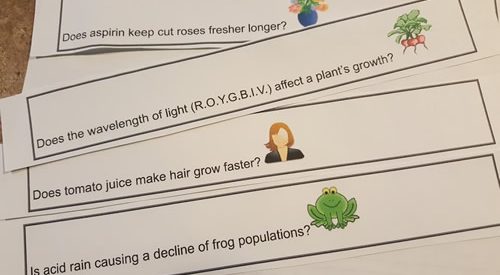
Scientific Method Scenarios
students work in groups to develop an experiment that answers a question. Students design the experiment, and must also identify the a control group and the independent and dependent variables in their experiment.
-
Population Biology with Paramecium
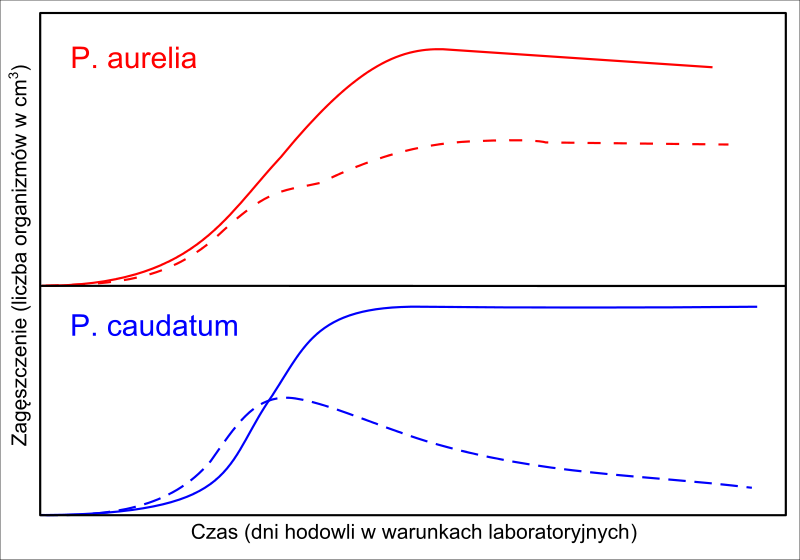
Activity illustrates the competitive exclusion principle by showing students how each population behaves when grown alone or when mixed together.
-
Removal of the Frog’s Brain
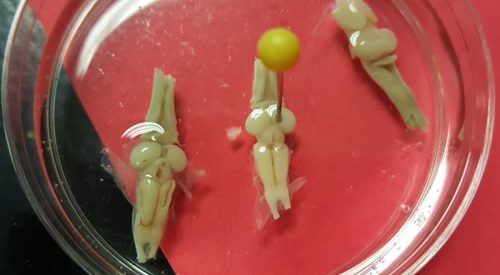
This worksheet provides instruction for removing the brain and reveal the lower leg bones, which include the femur and the tibiofibula (fused tibia and fibula).
-
Examining the Fossil Record
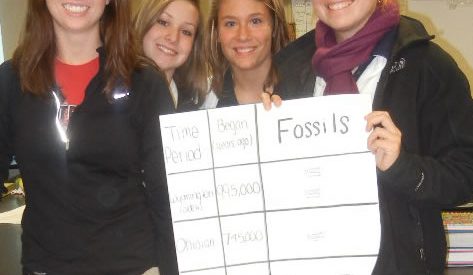
During a unit on evolution, students learn a little about geologic time and how we use the fossil record to establish lineages. In this project, students cut out pictures of fictional fossils and arrange them on a chart to show how one species become two species. The activity includes a description of phyletic and…
-
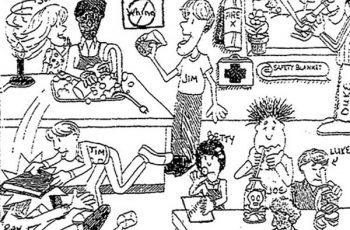
Lab Safety Cartoon
This cartoon depicts students engaging in safe and unsafe activities. It is a good starting point for a discussion on lab safety.