
Tag: experiment
-
The Ultimate Lab Report Guide
Teaching students to write a formal lab report can feel… ambitious. Many of them are used to worksheets, short answers, and quick reflections, not multi-page scientific writing. But helping students learn to communicate like scientists is one of the most important skills we can give them. A well-written lab report shows not just what they…
-
Lab: How Do Enzymes Work
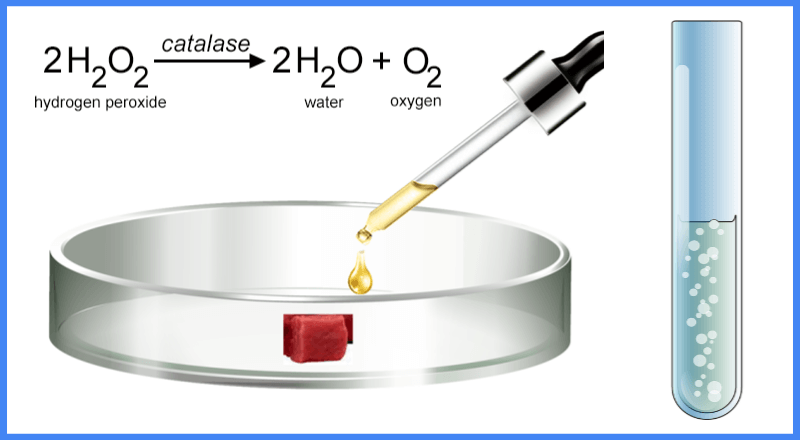
Explore how enzymes work with this engaging lab. I redesigned this lab with freshman students in mind. The directions are simple. Students drop hydrogen peroxide onto raw liver, and observe the bubbling. The bubbles are oxygen as it is being released in the reaction. The lab handout includes a background section that explains how enzymes…
-
Exploring Medication and Bioavailability
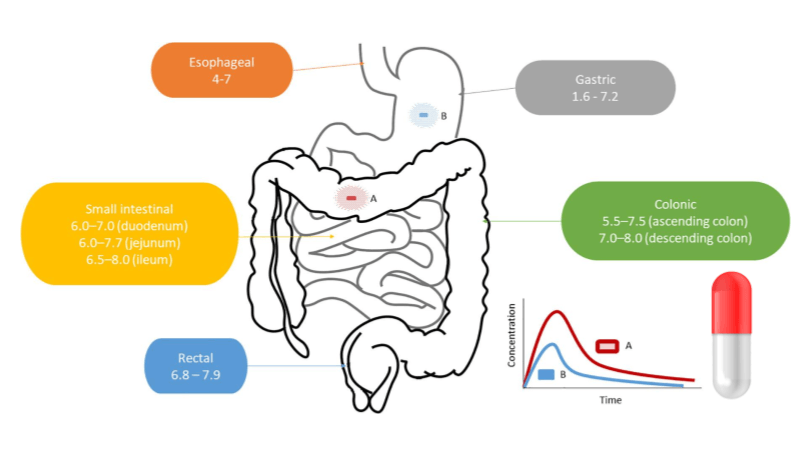
Bioavailability is a measure of the rate at which the active ingredient of a drug is absorbed and becomes available. It represents how much and how quickly a drug reaches the bloodstream. In this activity, student explore how medications dissolve in water (or other substances) and enter the blood stream. I created this lab to…
-
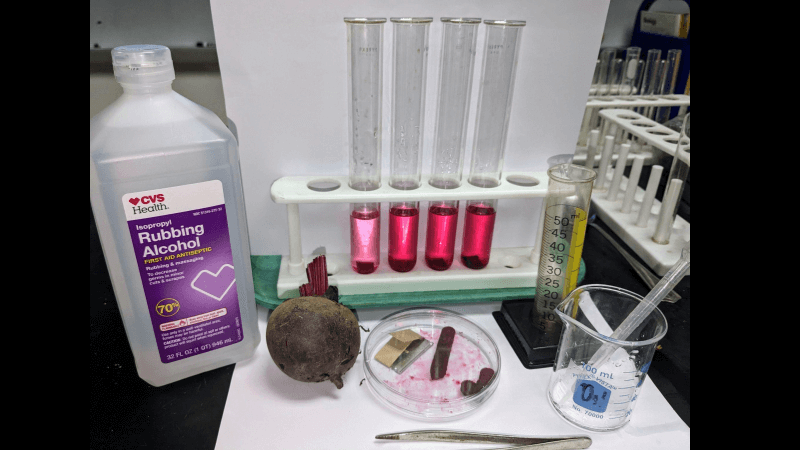
Use Beets to Explore Membrane Permeability
Students test the effects of pollution on membrane permeability using beetroot cores.
-
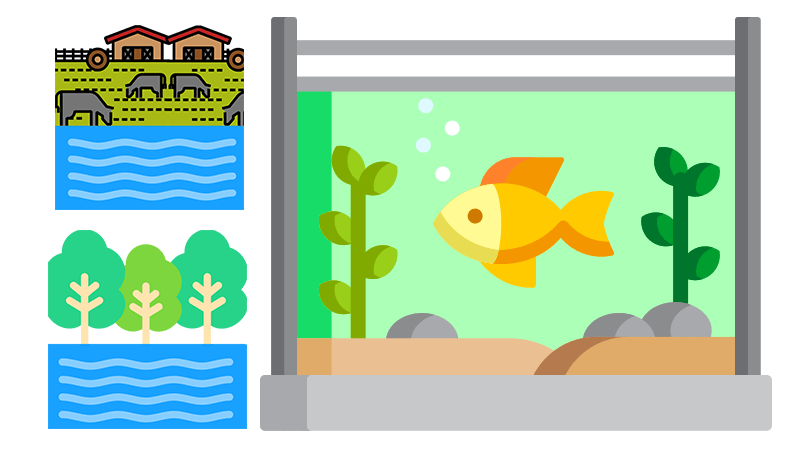
What Causes Algae Growth in Ponds?
Students examine data on two ponds to determine what is causing the algae growth in the pond near a farm.
-
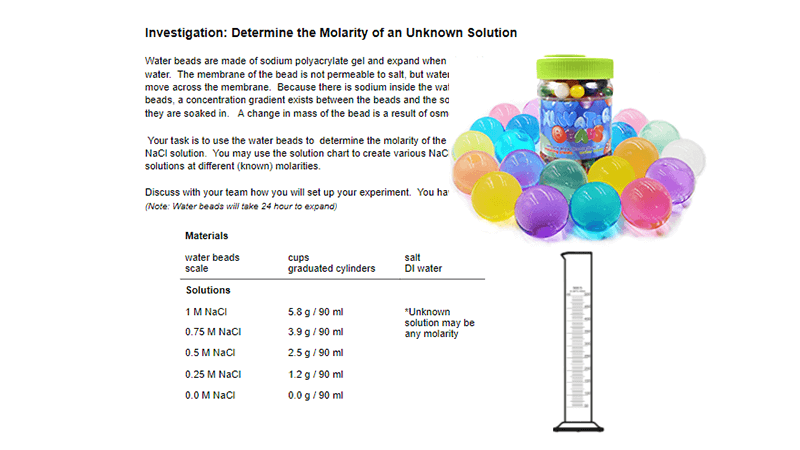
Investigation: Determine Molarity of Unknown Solution
Students determine the mass of water beads after soaking them in solutions. They use the change in mass to determine the molarity.
-
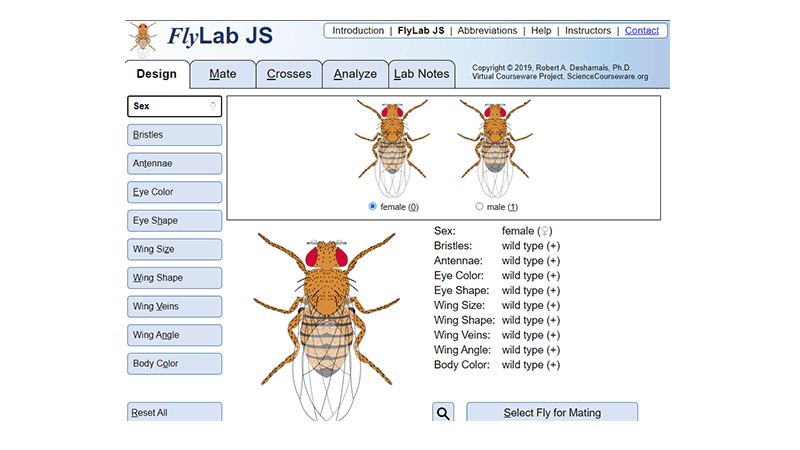
Virtual FlyLab (New!)
Virtual fruit fly genetics lab where students can explore phenotypes and genotypes of flies, design experiments, and perform chi square analysis
-
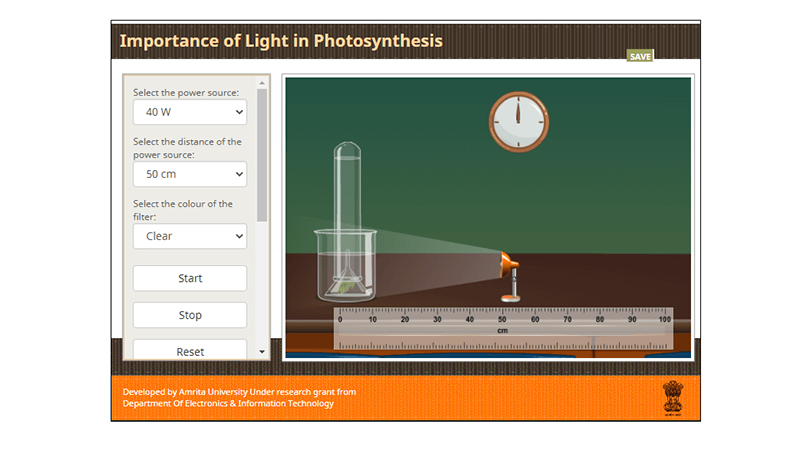
Photosynthesis Virtual Lab
This lab was created to replace the popular waterweed simulator which no longer functions because it is flash-based. In this virtual photosynthesis lab, students can manipulate the light intensity, light color, and distance from the light source. A plant is shown in a beaker and test tube which bubbles to indicate the rate of photosynthesis.…
-
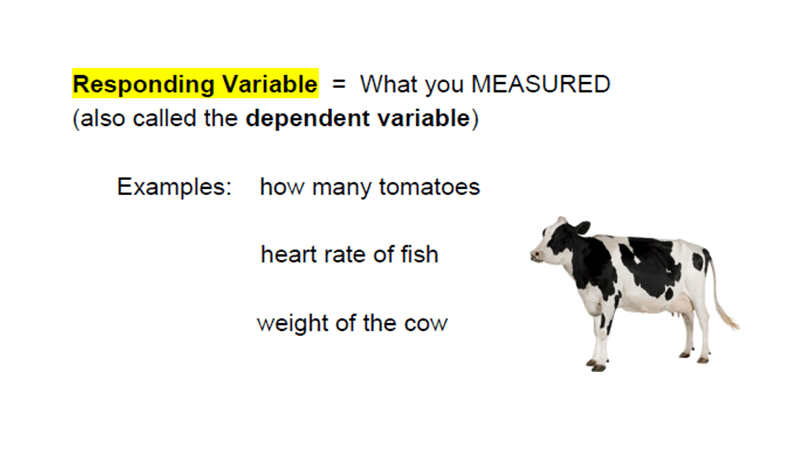
Highlight the Manipulated and Responding Variables
This worksheet describes the difference between an independent (manipulated) and dependent (responding) variable and then asks students to practice by identifying variables in short sentences.
-
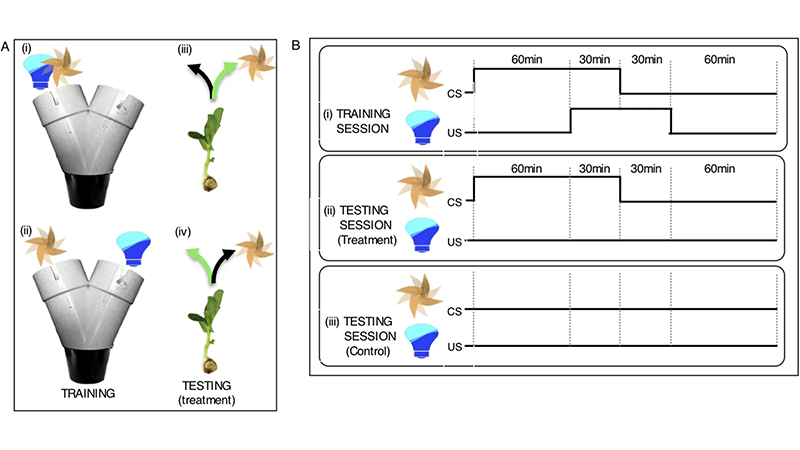
Can Plants Learn?
An experiment to determine if plants could learn by association Identify key features, such as variables, controls. Based on a real experiment in Nature.com.
-
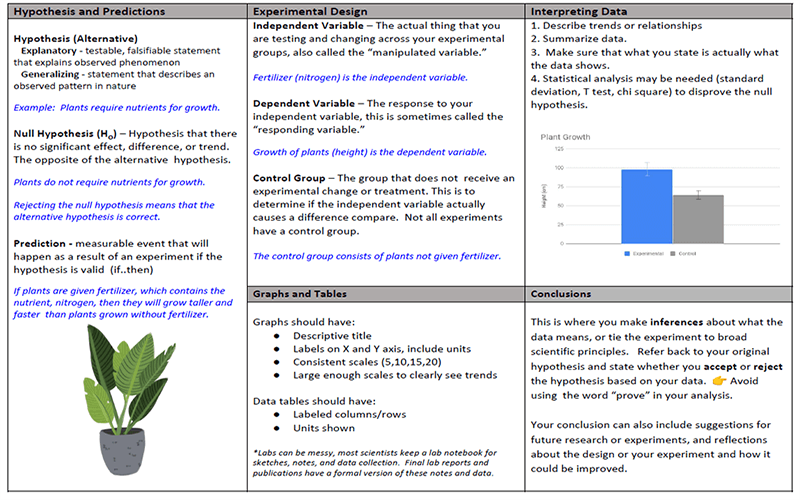
Experimental Design
Students in most science classes start with an overview of scientific processes. For advanced students, I use this cheat sheet to remind them of the major features of the scientific method, such as a control group, dependent and independent variables. AP Bio students are also introduced to the concept of the null and alternative hypotheses…
-
Fortune Telling Fish
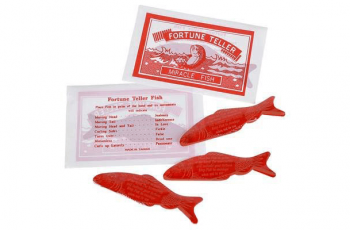
This activity is perfect for a first day or as an introduction to the scientific method. Though there isn’t quite as much cooperation as the “Saving Sam” activity, the fortune telling fish allows students to explore the nature of science together. The handout linked can be given to students, or you can also project them…
-
Investigation: The Effect of Salt on a Potato
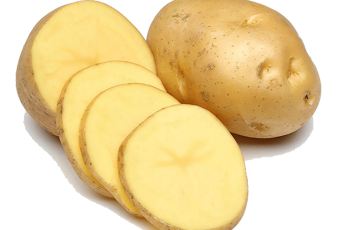
Students observe how the mass of a potato slice changes when soaked overnight in salt water. The activity is intended to be done as part of a lesson on osmosis and hypertonic and hypotonic solutions. Students will need about 15 minutes to set up their cups, weigh their slices and make predictions about what they…
-
Investigation: How Does a Water Strider Stay Afloat?
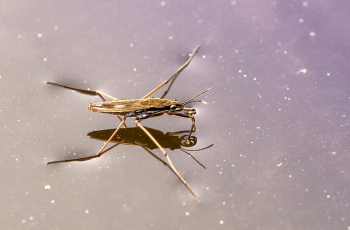
This lab was modified from the “Penny Lab” to focus more on the properties of water and how surface tension is important for aquatic organisms like the water strider. The instructions were designed for an intro (vocational) biology class that only meets for a semester.
-
Investigation: How Do Enzymes Work?
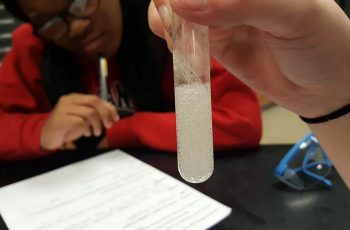
This lab is fairly basic, but when given with guided instruction how enzymes catalyze reactions, students can have a hands-on experience into how proteins are related to function.