
Tag: activity
-
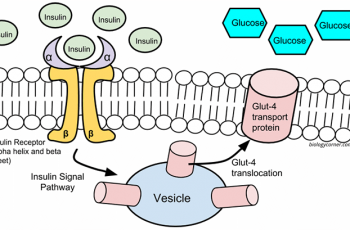
How is Glucose Taken Up by Cells?
This worksheet takes a closer look at the cell membrane and how insulin binds to the receptor on the cell membrane which creates a signal cascade, resulting in the movement of the Glut-4 transport protein to the surface of the cell. Students interpret a graphic showing the membrane, receptors, and the Glut-4 transport protein.
-
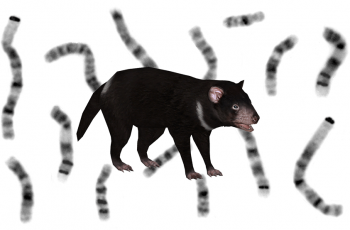
Karyotype of Tasmanian Devil Chromosomes
Students cut out each chromosome and organize them in pairs based on their patterns and size, they number them to determine the diploid number for the species and then consider a situation where the animal has an extra chromosome. Students must determine which set has the extra chromosome and consider the concept of trisomy.
-
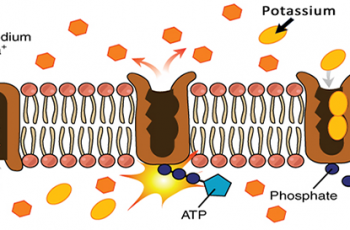
Cell Membrane Captions
Students examine images of transport across the cell membrane and identify key features such as the phospholipid bilayer, channel proteins, and receptors. Students then provide a title, such as “osmosis” and create a caption that describes the process being shown.
-
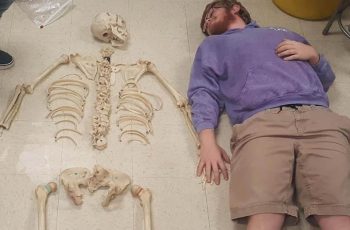
Estimate a Person’s Height from the Bones
In this activity, students use tape measures to estimate the length of their femur, ulna, and tibia. These lengths are then with an equation to estimate their height which can then be prepared to their actual height.
-
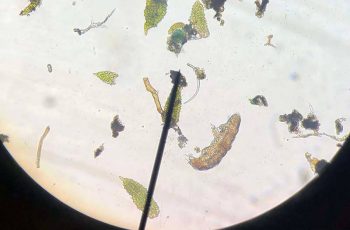
The Tardigrade Project
This project was created for AP Biology students where they scrape lichens from trees near campus and filter them over night so that tardigrades and other microorganisms can be collected from the water.
-
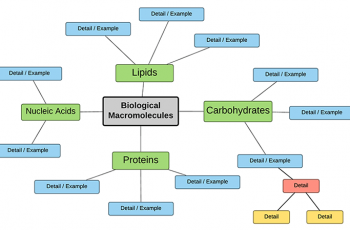
Create a Concept Map of Biomolecules
This activity asks students to work in groups to create a concept map (graphic organizer) on the biological macromolecules: carbohydrates, lipids, fats, and nucleic acids. Students are given brief instructions and a sample map to get them started, but they are responsible for determining what details are important in each section.
-
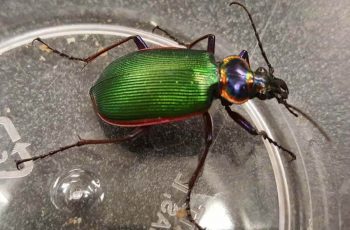
Investigation: How Do Insects Move?
Have you ever thought about how insects with 6 legs actually crawl? Human movement on two legs is pretty simple: left-right-left-right, but all insects have 6 legs attached to a thorax. In this activity, I ask students to observe an insect closely, usually a dubia roach.
-
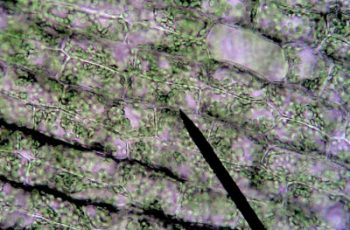
Using Anchoring Phenomenon with Lessons
Start lessons on osmosis with an activity and anchoring phenomenon. View cells exposed to salt and observe how they change!
-
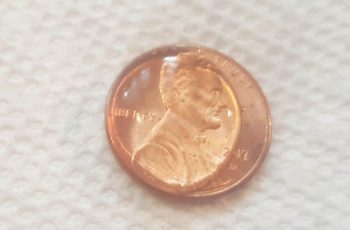
Penny Lab: Soap and Surface Tension
Most science classes begin the year with an exercise on the scientific method. It can be difficult to plan a short activity that will reinforce the main ideas of developing and testing a hypothesis. This lab is simple and doesn’t require much in the way of materials: pennies, water, and pipettes (and paper towels for…