
Category: AP Biology
-
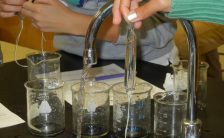
Investigation: Osmosis and Water Potential
Students models osmosis using dialysis tubes that contain different concentrations of sucrose. The tubes will gain water dependent upon the molarity of solution they are placed in. You can make sucrose solutions with table sugar, and instructions are included in the teacher’s guide to the lab. The second part of the investigation determine the…
-
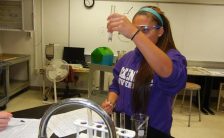
Investigation: Enzymes Activity with Catalase
Have you ever noticed that when you pour hydrogen peroxide on a wound, it bubbles? The reason is that bacteria and your own tissue contains an enzyme that breaks down the peroxide. Peroxide splits into a molecule of water and a molecule of oxygen, which causes the bubbles. In a series of tests, students observe…
-
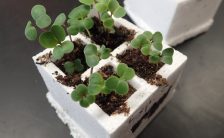
AP Biology – Investigation on Genetics with Plants
A modified AP Lab where students learn to grow plants from a seed, cross pollinate plants and conduct an inquiry investigation about plant genetics.
-
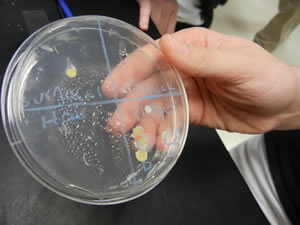
Why I Teach Pathology in Biology
When you examine the AP Biology Course Description, there is no mention of pathology (the study of diseases) in the list of Big Ideas. Bacteria are mentioned in the context of comparison between prokaryotes and eukaryotes, lines of descent, and endosymbiosis. Viruses are mentioned within the context of genetics and how DNA can be transferred…
-
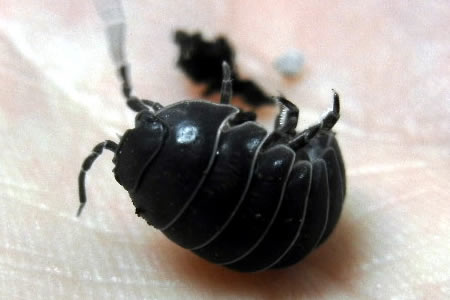
How to Raise Isopods (Pillbugs) for Your Classroom
How to keep isopods, or pillbugs, in the classroom. Use a plastic container with soil, water beads, and a place to hide!
-
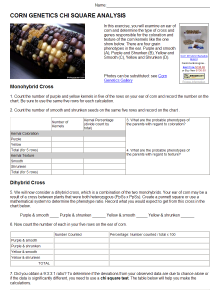
Teaching Chi Square Analysis
How to teach chi square analysis in biology. Includes presentation slides and student assignment.