

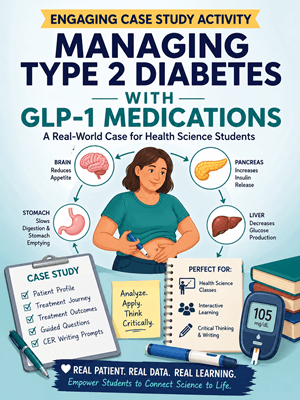
If you’re looking for a meaningful way to connect biology concepts to real life, check out this case study on managing Type 2 Diabetes. Students focus on how GLP-1 medications help the body maintain blood sugar levels.
One of the most fascinating aspects of this activity is how it highlights the role of Glucagon-like peptide-1 (GLP-1), a hormone released by the small intestine after eating. GLP-1 is part of the body’s natural system for maintaining blood sugar balance. When food enters the digestive system, GLP-1 signals the pancreas to release insulin, but only when blood glucose levels are elevated, helping prevent dangerous spikes in blood sugar. At the same time, it suppresses glucagon, a hormone that would otherwise cause the liver to release additional glucose into the bloodstream.
What makes GLP-1 especially interesting for students is that it doesn’t just act in one place, it coordinates multiple systems. It slows stomach emptying, which spreads out the absorption of glucose into the bloodstream, and it interacts with the brain to promote feelings of fullness and reduce appetite. These combined effects make GLP-1 a powerful regulator of energy balance and metabolism.
GLP-1 medications mimic natural hormones but last much longer in the body. This allows for sustained blood sugar control and often leads to additional benefits like weight loss. By exploring this mechanism, students gain insight into how modern medicine builds on the body’s own biological processes to treat disease.
Instead of memorizing definitions, students step into the role of a healthcare professional. They analyze a patient’s journey, interpret real data, and evaluate treatment decisions. This shifts learning from passive to active, helping students build a deeper understanding of how the body maintains balance and responds to disease.
What Students Will Do
- Analyze a patient case from diagnosis through treatment
- Interpret data such as A1C and blood glucose levels
- Evaluate the effectiveness of medications and lifestyle changes
- Complete guided questions to build understanding
- Write Claim–Evidence–Reasoning (CER) responses using scientific data
- Bonus coloring page included!
This case study goes beyond content knowledge. It encourages students to think critically, apply biological concepts, and make connections to real-world health issues. By integrating CER writing, students practice constructing scientific explanations—an essential skill for NGSS-aligned classrooms.
The inclusion of visuals and a coloring page also supports diverse learners, making complex processes more accessible and engaging.
Related Resources
Endocrine System Unit – slides and guided notes, plus other resources on the endocrine system
Stem Cell Therapy for Type 1 Diabetes – article with questions exploring a potential cure for diabetes
Feedback Loops: Insulin and Glucagon – examine a graphic showing the relationship between hormones that control blood sugar
Cell Signaling: How is Glucose Taken Up by Cells – focus on the signal cascade that results in the Glut-4 transport protein opening to allow insulin uptake by cells
Practice Quiz on the Endocrine System – self grading quiz posted on Wayground