INTERPRETING ECOLOGICAL DATA

Graph 1: Rabbits Over Time
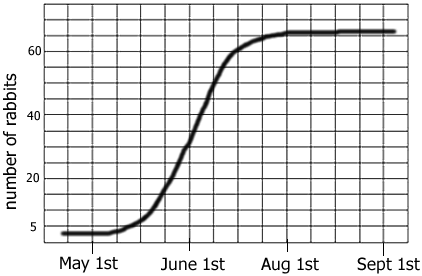
a. The graph shows a __________ growth curve.
b. The carrying capacity for rabbits is ______
c. During which month were the rabbits in exponential growth?
Graph 2: Mexico and US
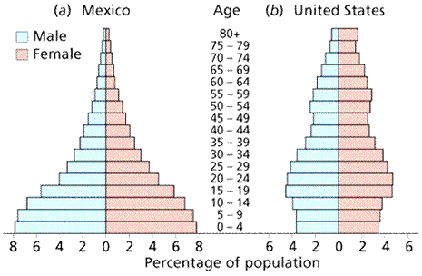
a. In Mexico, what percentage of the population is between 0-4 years
of age? _______ In the US? ______
b. Which population is growing the fastest? ________
c. Which age group has the smallest number in both countries? _____
Chart 3: Trapping Geese
In order to estimate the population of geese in Northern Wisconsin, ecologists marked 10 geese and then released them back into the population. Over a 6 year period, geese were trapped and their numbers recorded.
| Year | Geese Trapped | Number with Mark |
| 1980 | 10 | 1 |
| 1981 | 15 | 1 |
| 1982 | 12 | 1 |
| 1983 | 8 | 0 |
| 1984 | 5 | 2 |
| 1985 | 10 | 1 |

a. Use the formula to calculate the estimated number of geese in the
area studied? _____________
b. This technique is called ____________ & ______________
c. Supposing more of the geese found in the trap had the mark, would the
estimated number of geese in the area be greater or lesser? _____
Chart 4: Mushroom Plots
Another ecologist uses a different method to estimate the number of mushrooms in a forest. She plots a 10x10 area and randomly chooses 5 spots, where she counts the number of mushrooms in the plots and records them on the grid.
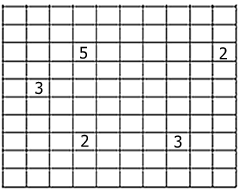
a.Calculate the number of mushrooms in the forest based on the grid data:
_________________
b. Thie technique is called _______________
Chart 5: Snakes & Mice
| Year | Snakes | Mice born | Mice died |
| 1960 | 2 | 1000 | 200 |
| 1970 | 10 | 800 | 300 |
| 1980 | 30 | 400 | 500 |
| 1990 | 15 | 600 | 550 |
| 2000 | 14 | 620 | 600 |
| 2001 | 15 | 640 | 580 |
The data shows populations of snake and mice found in an experimental field.
a. During which year was the mouse population at zero population growth?
______
b. What is the carrying capacity for snakes ? ______
c. What is the carrying capacity for mice? _____
d. What is the rate of growth (r) for mice during 1970? _____ During 1980?
______
More Resources on Ecology
Case Study – Loggerhead Turtles and Population Models – explore the number of eggs hatched and survivorship
Ecology Case Study – The Wolves of Isle Royale – population decline and reintroduction of wolves
Modeling Survivorship Curves with Bubbles – simulate survival patterns with this fun bubble activity
Predator Prey Graph – graph data on deer and wolf populations (growth curves)
Random Sampling – estimate a population of “sunflowers”