 DNA Extraction of the Succulent Strawberry (Bio1)


Strawberry DNA is composed of nucleotides arranged in a specific sequence to form the genetic code. DNA, or deoxyribonucleic acid, is a double-stranded molecule shaped like a double helix. Each strand consists of a sugar-phosphate backbone with nucleotide bases extending inward.
DNA extraction is important because it enables research and helps scientists learn what makes living things unique. DNA can also be used in medicine to create vaccines and other therapies. DNA can also be used to identify remains, or determine a species of animal.
 Why Use Strawberries
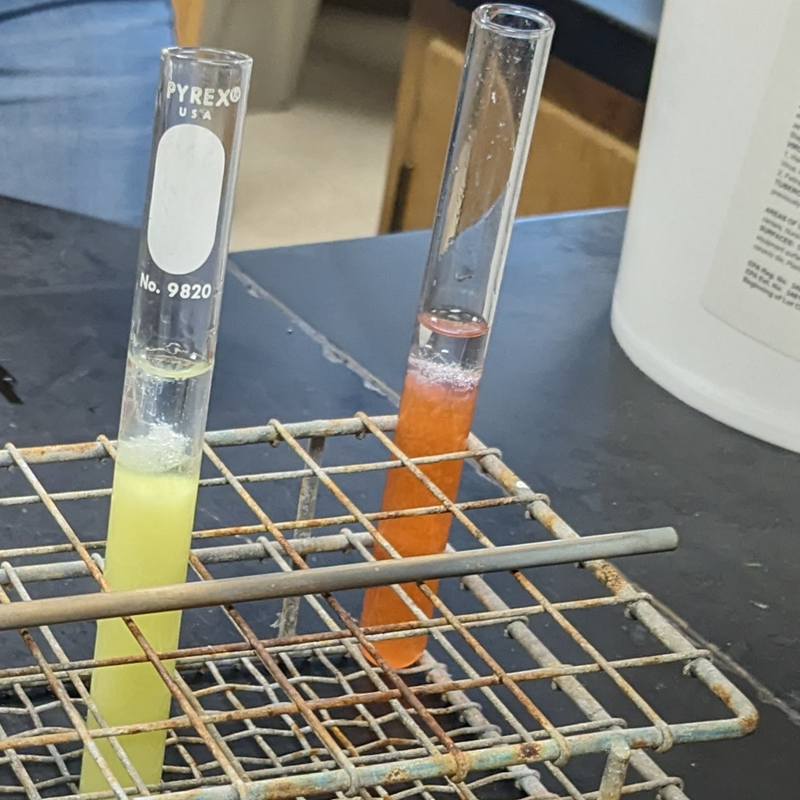
Strawberries are octoploid, which means they have eight sets of chromosomes. The procedure for extracting DNA from a strawberry is simple, and the results are usually obvious, it is easy to see the white strands of DNA within the pink solution of strawberry juice.
In this procedure, you will crush a strawberry and add detergent and salt to break down the cell walls to release the DNA within the nucleus. You will then filter the liquid from this crushed strawberry into a beaker, the substance is called the filtrate.
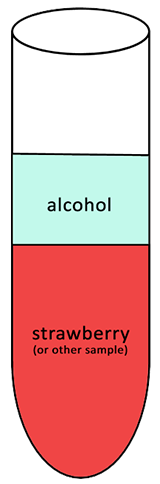
The filtrate is then poured into a test tube and a layer of alcohol is poured over the top. The DNA will then precipitate into the alcohol layer in a test tube
Objectives:
- Extract DNA from a strawberry using household products
- Identify the role of chemicals in the process of extracting DNA
- Observe a large sample of DNA
Materials Needed:
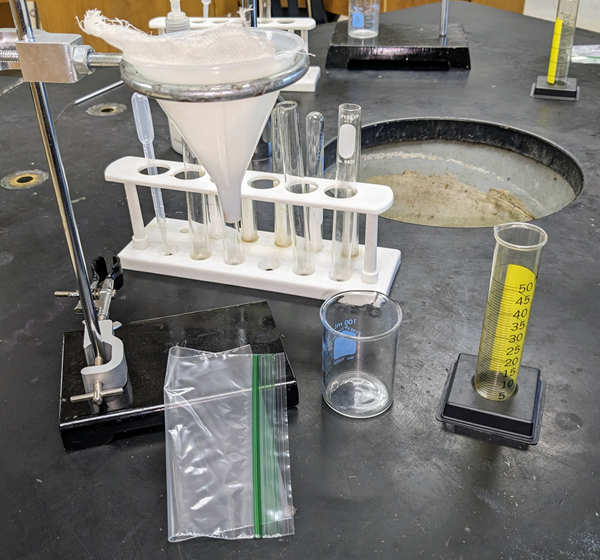
- DNA Extraction Buffer:1000 ml of deionized water, 50 ml of clear dish detergent, 1 teaspoon of salt
- Strawberry (other fruits also work)
- Ziploc bag
- Coffee filters (or cheesecloth) and funnels
- Test tubes, beakers, or cups to collect filtrate
- Graduated cylinder for measuring (optional)
- Ethanol or 91% isopropyl alcohol (chilled)
Procedure
1. Add a strawberry (or half) to a Ziploc storage.
2. Add 10 ml of the DNA extraction buffer and mash the strawberry and buffer for about one minute.
3. Use a funnel and coffee filters to filter the strawberry juice into a small beaker.
4. Transfer the filtrate to a test tube, you should only fill the test tube about halfway full and avoid transferring any foam.
5. Slowly pour or drip cold alcohol over the top of the strawberry mixture. You want a single layer (about 1 inch) on top of the strawberry mixture. - Wait 3 minutes!
6. White strands will form in the ethanol layer, use a stirring rod to spool the strands.
Discussion Questions
1. Describe the molecule of DNA.
2. We cannot see the actual DNA molecule, but we can see DNA extracted from the strawberry. What does it look like?
3. Why is DNA extraction an important technology?
4. What is the role of detergent and salt in the extraction process?
5. What is the difference between the filtrate and the precipitate?
6. What is the role of ethanol (alcohol) in the process?
7. Is there DNA in your food? How do you know? Why are you not harmed (or altered) by ingesting the DNA of another organism?
8. DNA can be extracted from most food sources, even animals cells. What makes strawberries an ideal specimen for DNA extraction?
LAB SET-UP
Potential Results
Other DNA Resources
Investigation: DNA Extraction for AP Biology - students extract DNA from different samples and write a lab report; with Claim, Evidence and Reasoning
DNA Investigation with Strawberries (basic) - simplified version of DNA extraction lab for intro level, with minimal equipment
Coloring DNA - basic image of DNA and RNA for students to color following directions; includes questions and analysis
DNA Crossword - puzzle to practice basic terms related to DNA
DNA Extraction Google Slides - an explanation for why alcohol and salt can extract DNA
Quizziz - Practice what you have learned about DNA Extraction