The Cell Cycle
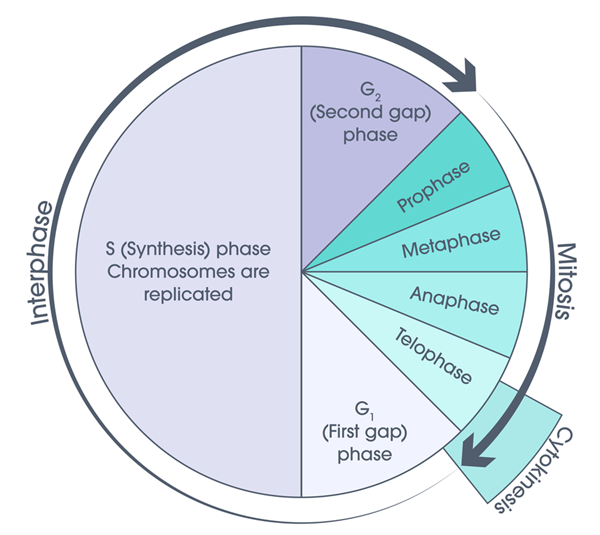
The cell cycle is the series of events that a cell goes through as it grows and prepares to divide. It's like a cell’s version of a daily planner—everything from growing and copying its DNA to finally splitting in two happens in a specific order.
The cell cycle is made up of two main phases:
Interphase – where the cell grows and prepares for division.
Mitotic phase (M phase) – where the cell actually divides.
Interphase
Interphase isn’t just a resting stage—far from it! This is where the cell does most of its work and gets ready to divide. Interphase is split into three parts:
G1 Phase (Gap 1): The cell grows, makes proteins, and performs its everyday functions. It’s like the “getting things done” phase.
S Phase (Synthesis): The cell duplicates its DNA. Now it has two complete sets—one for each future cell.
G2 Phase (Gap 2): The cell makes final preparations, like producing more proteins and organelles, and checks for DNA errors.
Mitotic Phase (M Phase):
This is the moment the cell has been preparing for. The M phase includes two key processes:
Mitosis: This is the division of the nucleus and its DNA. It occurs in several stages:
Prophase: Chromosomes condense and become visible; the nuclear envelope begins to break down.
Metaphase: Chromosomes line up in the middle of the cell.
Anaphase: The chromosome pairs are pulled apart to opposite sides.
Telophase: New nuclear envelopes form around each set of chromosomes.
Cytokinesis: This is the final split—where the cell’s cytoplasm divides and two new, identical cells are formed.
Why the Cell Cycle Matters
The cell cycle is vital for:
Growth: From a single fertilized egg to a fully formed human.
Repair: Healing wounds or replacing damaged cells.
Maintenance: Replacing cells that wear out (like skin or blood cells).
But when the cycle goes wrong—when a cell divides uncontrollably—it can lead to problems like cancer. That’s why the cycle has built-in checkpoints to make sure everything happens correctly. If something’s off, the cell can pause the cycle or even self-destruct in a process called apoptosis.