The Genetics of Eye Color
 Student Activty: The Eyes Have it! (The Genetics of Eye Color).
This case study explores the role of OCA2 and HERC2 in the expression of genes related to eye color.
OCA2 and HERC2 Genes
Heredity of eye color is a complex trait influenced by multiple genes, with two of the most prominent ones being HERC2 and OCA2. These genes are associated with the production and distribution of melanin, the pigment responsible for the color of our eyes, skin, and hair. Here's how HERC2 and OCA2 affect eye color.
OCA2
- OCA2 is a gene located on chromosome 15 that plays a crucial role in the production of melanin, specifically the brown to black pigment known as eumelanin.
- The OCA2 gene codes for a protein that regulates the melanosomes, which are responsible for melanin production.
- Mutations in the OCA2 gene can affect the amount and distribution of melanin in the iris of the eye.
- Individuals with two functional copies of OCA2 typically have brown eyes.
- If someone has two non-functional copies of OCA2, they are more likely to have blue or green eyes because less eumelanin is produced, and the underlying blue structural color becomes more visible.
HERC2
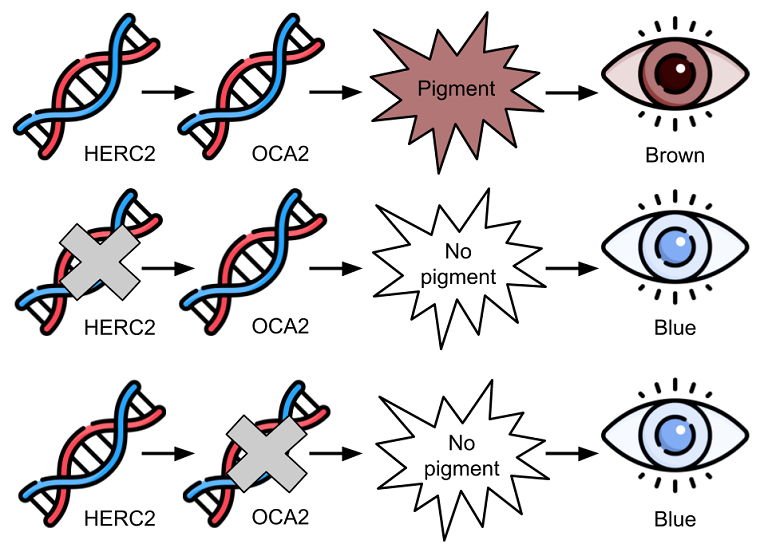
- The HERC2 gene, located near OCA2 on chromosome 15, does not directly control melanin production but instead regulates the expression of OCA2.
- A specific region of the HERC2 gene influences OCA2 expression, allowing it to produce melanin.
- Mutations in the regulatory region of HERC2 can affect the expression of OCA2
- A variant of the HERC2 gene is associated with the expression of OCA2 and is more common in people with blue eyes.
The interplay between OCA2 and HERC2 is the reason why people with blue eyes have less eumelanin in their irises. In individuals with brown eyes, both OCA2 and HERC2 are functioning properly, leading to the production of more melanin. Green and hazel eyes often result from a combination of genetic factors that influence the amount and distribution of melanin in the iris.
Other genes and environmental factors can also influence eye color variation. Eye color inheritance is a complex polygenic trait, meaning it is determined by multiple genes working together, making it challenging to predict with absolute certainty.