Plants - Form, Function, and Taxonomy 

Classifying Plants
Nonvascular: have no vessels, no roots, no stems or leaves.
Examples: Mosses & Liverworts
Vascular: have vessels to transport food and water. They have roots, stems and leaves. Example: Grass, corn, trees, flowers, bushes
Xylem: transports water
Phloem: transports food & nutrients
Gymnosperms
- "naked seeds"
- cone bearing plants (seeds grow on cones)
- needle like leaves
- usually stay green year round
- wind pollinated
- Examples: pine trees & evergreens
Angiosperms
- flowering plants
- seeds are enclosed in a fruit
- most are pollinated by birds & bees
- have finite growing seasons
- Examples: grasses, tulips, oaks, dandelions
- Divided into two main groups: Monocots & Dicots
Monocots
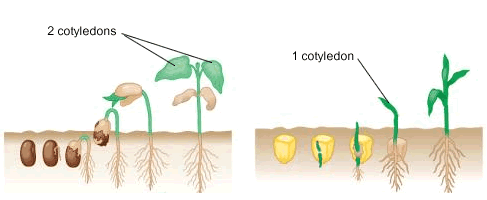
- Angiosperms have have 1 seed leaf (cotyledon)
- parallel veins on leaves
- 3 part symmetry for flowers
- fibrous roots
- Example: lilies, onions, corn, grasses, wheat
Dicots
- Angiosperms that have 2 seed leaves (cotyledons)
- net veins on leaves
- flowers have 4-5 parts
- taproots
- Examples: trees and ornamental flowers
Parts of the Plant
Roots
- water and minerals are absorbed (taproots vs fibrous roots)
- also used to anchor the plant
- movement of water up to leaves is influenced by TRANSPIRATION
Stems
- Support plant
- transport water through xylem
- transport nutrients through phloem
- a celery stalk soaked in food coloring will absorb the food coloring, you can see the xylem
- Two types of stems: herbaceous and woody
Leaves
- Photosynthetic organ of the plant, used to convert sunlight into food
- Photosynthesis Equation:
- Stomata: pores within the leaf that open to let CO2 in and O2 out. Guard cells open and close.
- Cuticle: waxy covering on leaf that prevents water loss

Flower
- Reproductive organ of the plant
- Flowers are usually both male and female
- The male part of the flower is the STAMEN
- The female part of the flower is the PISTIL
- See your coloring sheet for more detail on flower anatomy
Plant Reproduction
- Pollen is produced by the stamen.
- Pollen moves away from the plant via the wind or other pollinators (birds & bees)
- The pollen lands on the pistil of another plant and fertilizes the eggs within the ovary
- The flower petals fall off, the ovary develops into a FRUIT that encloses the seeds
- Fruits are dispersed in a variety of ways (wind, animals)
- Fruits are not always edible, anything with a seed inside can be considered a fruit (helicopters, acorns, dandelions)
Asexual Reproduction in Plants
- Many plants can clone themselves, a process called VEGETATIVE PROPAGATION
- strawberry plants and other vine like plants send out runners, which grow into new plants
- some plant clippings will grow into new plants
- a Potato will grow into a new plant
How Plants Grow
- Germination occurs when a seed sprouts (usually caused by changes of temperature and moisture)
- Monocots have 1 seed leaf (cotyledon), Dicots have 2 seed leaves
- Perennials - live several years, and reproduce many times, woody plants are perennials
- Annuals - a plant that completes its life cycle in one growing season (grows, flowers, reproduces and then dies)
- Biennials - takes two growing seasons to complete, it reproduces in the second growing season
- Plants grow only at their tips in regions called MERISTEMS
- PRIMARY GROWTH makes a plant taller at roots and stems
- SECONDARY GROWTH makes a plant wider, or adds woody tissue
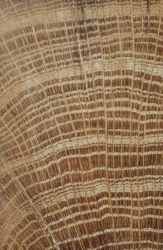
- Tree Rings tell the age of a tree, each ring represents a growing season. The photo shows a tree who has been through four growing seasons. The lighter thinner rings are winter periods.
- VASCULAR CAMBIUM: area of the tree that makes more xylem and phloem and forms the annual rings