Chordates and Vertebrates


Key characteristics:
-Dorsal, hollow nerve cord - nervous system
-Notochord (usually present only in embryo) - support
-Pharyngeal pouches -paired structures in throat; may develop into gills
-Tail - extends beyond anus
About 96% of all chordate species belong in one subphylum:
Subphylum Vertebrata- Vertebrates
---Animals with a backbone or vertebral column (endoskeleton)
----Have spinal cord - dorsal, hollow nerve cord
----Front end of spinal cord develops a brain
Nonvertebrate Chordates -- 2 subphyla of chordates without backbones:
Subphylum Urochordata
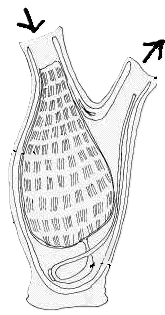
-Known as sea squirts or tunicates
-Filter-feeders in ocean, adults are sessile
-Only larval tunicates have chordate characteristics, having a notochord during early development
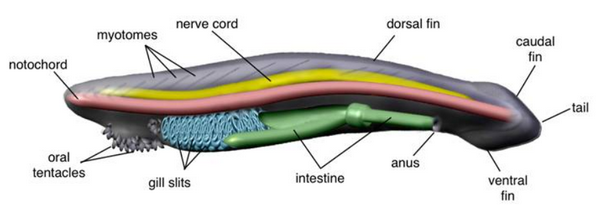
Subphylum Cephalochorodata
-Lancelets
-Small fishlike animals, that often live partly buried in the sand
-Adult lancelets have chordate characteristics
-Have definite head region
Timeline of Vertebrate Evolution
Check out: The History of Life at Berkeley.edu
| About When | Age | Animals |
| 550 million years ago | Ordovician Period | First vertebrates |
| 400 million years ago | Devonian Period "Age of Fishes" |
Acanthodians jawed fishes |
| 350 million years ago | Carboniferous Period (and Permian) "Age of Amphibians" |
Amphibians |
| 240 million years ago | Triassic Period "Age of Dinosaurs" |
reptiles appeared dinosaurs dominated the land for 150 million years - sauropods, theropods, etc.. |
| 60 million years ago | Tertiary Period "Age of Mammals" |
Dinosaurs extinct Mammals appeard |
| 340,000 years ago | Quaternary period | Humans appeard |