HOW PROTEINS ARE MADE BY THE CELL


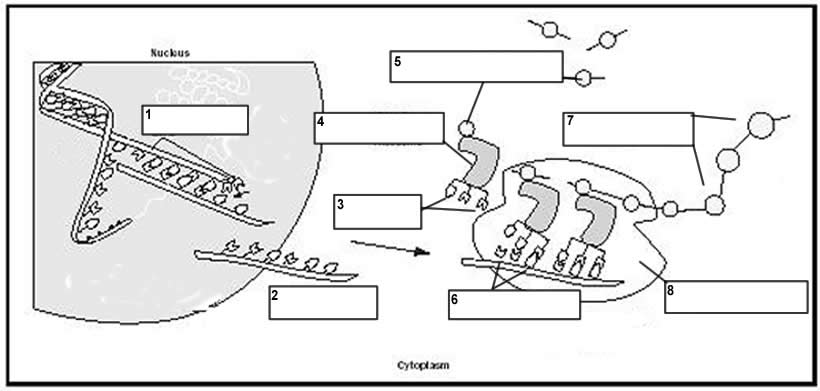
TRANSCRIPTION
1. One of the strands of DNA is used as a template to create a strand of mRNA
2. Requires the enzyme RNA polymerase
3. Transcription always starts at a region called the promoter.
4. Introns are segments of DNA that do not contain genes. Exons are segments that contain genes.
5. Each 3 bases on mRNA is a codon, it corresponds to an amino acid (see codon chart)

TRANSLATION
1. Takes the message on mRNA and converts it into an amino acid chain
2. Individual amino acids will join to form a protein. Shapes and composition of protein determine its functionality (hair, enzymes, skin, muscles etc)
The steps in translation are:
1. The ribosome binds to mRNA at a specific area.
2. The ribosome starts matching tRNA anticodon sequences to the mRNA codon sequence.
3. Each time a new tRNA comes into the ribosome, the amino acid that it was
carrying gets added to the elongating polypeptide chain.
4. The ribosome continues until it hits a stop sequence, then it releases the
polypeptide and the mRNA.
5. The polypeptide forms into its native shape and starts acting as a functional
protein in the cell.
Put the appropriate labels in the boxes.
Resources on Transcription and Translation
DNA Coloring with Transcription and Translation
