Anatomy and Physiology 2

Course Objective: The study of biology contributes to the general cultural knowledge of the student. A course in physiology meets the needs of a more complete understanding of the basic principles of the body and its functions. Those students interested in health professions are introduced to the concepts which will provide them a foundation for further studies.
I. The Sense Organs
A. The anatomy of the eye and how vision works
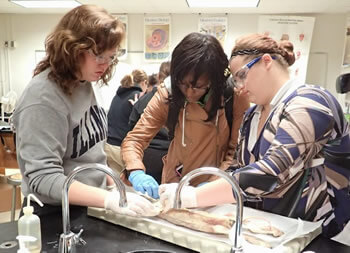
B. Dissection of a cow eye
C. The anatomy of the ear and how hearing works
D. Olfactory and gustatory sense organs
II. Endocrine System
A. Basic functions of the endocrine system
B. Hormones and health
III. The Circulatory System
A. Anatomy of the heart
B. Cardiac cycle, heart rate, and pulse
C. Dissection of a sheep heart
D. Identify
major arteries and veins
E. Cat dissection - trace the arteries and veins
F. Measurement of blood pressure using the sphygmomanometer
G. Types of blood cells
H. Genetics of blood types
IV. The Digestive System
A. Organs involved
in digestion
B. The alimentary canal and accessory organs
C. Metabolism and
energy balance (basal metabolic rate)
D. Disorders of the digestive system
V. The Respiratory System
A. Organs involved
in respiration
B. Breathing mechanism and gas exchange
C. Disorders of the respiratory system
VI. Urinary System
A. Anatomy of the
kidneys (general and microscopic)
B. Urine formation and elimination
C. Disorders of the urinary systems
VII. Reproductive System
A. Organs of the
male reproductive system
B. Organs of the female reproductive system
C. Birth control and pregnancy
Classroom Resources
Anatomy and Physiology Class Site
Chap 1: Introduction to Anatomy
Chap 3: Cells
Chap 5: Tissues
Chap 7: Skeletal
Chap 8: Muscular
Chap 9: Nervous
Chap 10: Senses
Chap 11: Endocrine
Chap 12: Blood
Chap 13: Circulatory
Chap 15: Digestive
Chap 16: Respiratory
Chap 17: Urinary
Chap 19: Reproductive